There is a moment most of us have lived: you sit down after a long day, remote in hand, ready to unwind, and suddenly you are drowning in app icons, buffering wheels, and subscription prompts you do not remember signing up for.
Somewhere between cable TV dying and streaming exploding, the way we watch television got complicated. If you have ever stared at your screen wondering what the difference actually is between all these services, you are far from alone. The words OTT and IPTV get thrown around constantly, as if everyone already knows what they mean. If you want to buy IPTV subscription plans that genuinely fit your lifestyle, the first step is understanding what you are actually buying and why it matters.
This guide cuts through the noise with plain, honest answers. Whether you are approaching OTT and IPTV as a complete newcomer or simply trying to confirm what you already suspect, by the time you finish reading you will know exactly what separates these two technologies, which one suits your viewing habits, and how to get the most value from your streaming setup in 2026.
Table of Contents
What Is OTT Streaming? A Clear Starting Point
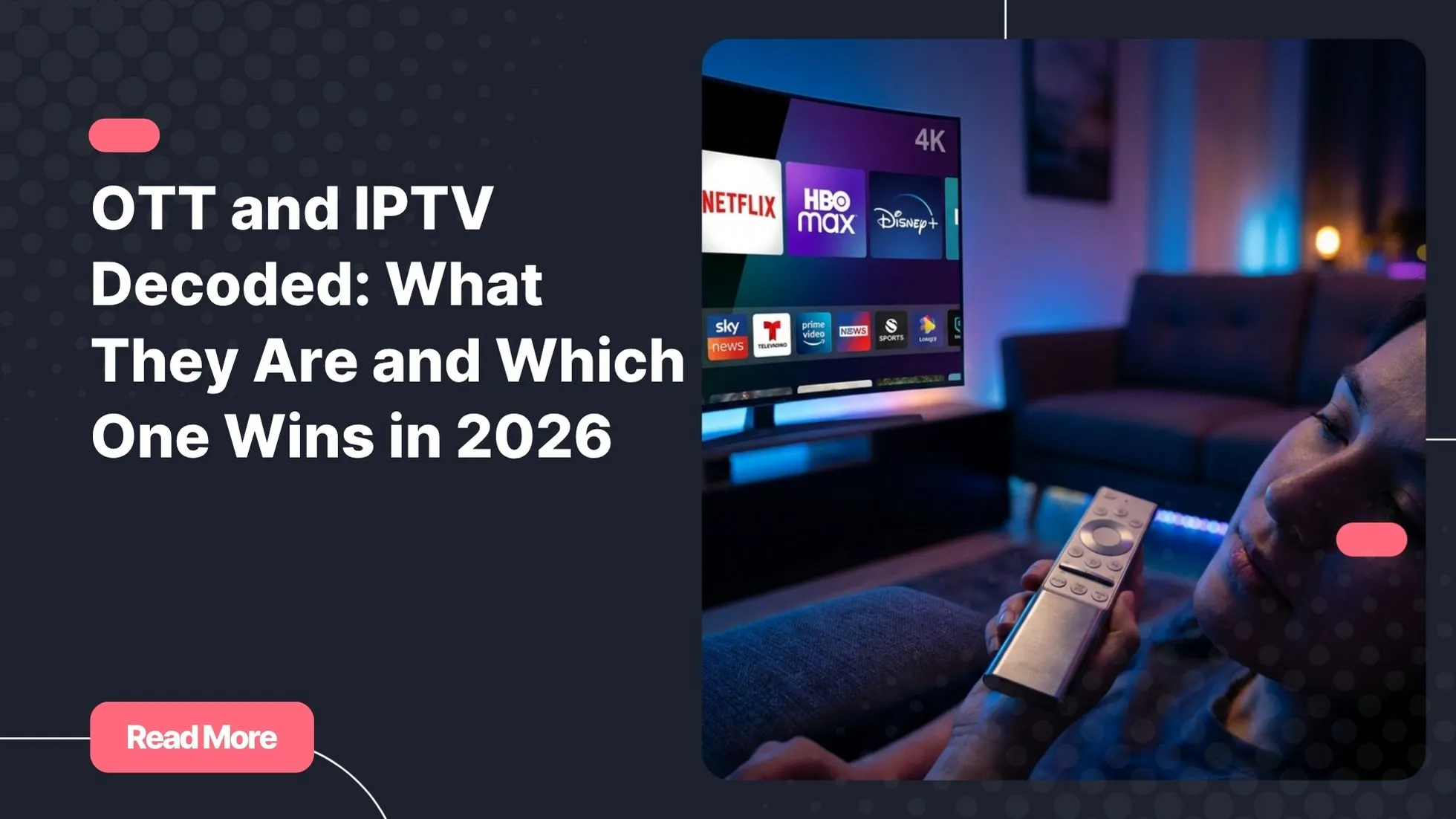
OTT stands for “Over-The-Top.” It refers to any video streaming service that delivers content directly over the public internet, bypassing traditional cable or satellite infrastructure entirely. Netflix, YouTube, Disney+, Amazon Prime Video – these are all OTT platforms. You access them through an app or browser, on virtually any internet-connected device you already own.
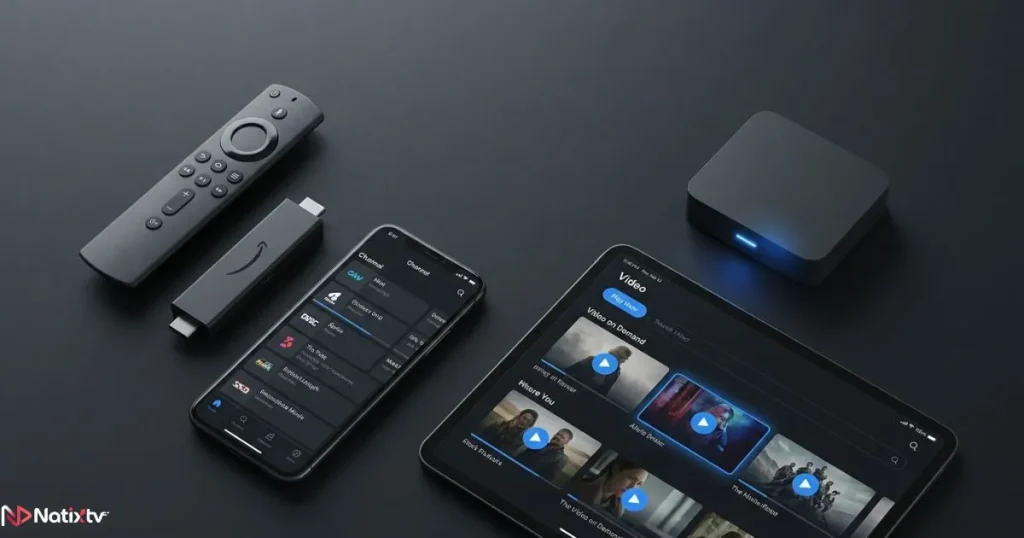
The “over-the-top” name comes from the fact that these services ride on top of your existing broadband connection. No dedicated network. No specialist equipment required. Just an internet plan and a compatible screen.
The Three Flavours of OTT Content
OTT services typically fall into one of three commercial models:
- SVOD (Subscription Video on Demand): A fixed monthly fee for unlimited access. Netflix and Disney+ work this way.
- AVOD (Ad-Supported Video on Demand): Free to watch, funded by advertising. YouTube and Tubi are examples.
- TVOD (Transactional Video on Demand): Pay per title, like renting a film from Apple TV.
OTT streaming excels at on-demand flexibility. You watch what you want, when you want, pausing and resuming across devices without friction. According to Statista, the global OTT video market is projected to surpass $500 billion by 2027, a figure that reflects how deeply this technology has embedded itself into daily life.
The trade-off? Each OTT platform is a separate subscription. Stack four or five of them together and you can easily spend more per month than a traditional cable bill. This phenomenon – sometimes called “subscription fatigue” – is one of the key reasons so many viewers are now exploring IPTV.
What Is IPTV? Understanding the Technology Behind It
IPTV stands for “Internet Protocol Television.” Like OTT, it uses the internet to deliver video – but the similarity ends there. IPTV technology operates over a managed, dedicated IP network rather than the open public internet. This controlled environment allows providers to guarantee a consistent quality of service in a way that standard OTT streaming simply cannot.
Think of it this way: OTT is like sending a letter through the general postal system, hoping it arrives on time. IPTV is like using a private courier service with a tracked, guaranteed delivery window.
How IPTV Technology Actually Delivers Your Picture
When you press play on an IPTV service, your content travels from the provider’s servers, is encoded into IP data packets, passes through a managed network pipeline, and arrives at your device with consistent speed and quality. The entire path is controlled and monitored. That is why IPTV streaming can support thousands of simultaneous live channels without the stuttering or buffering you might experience on a standard OTT service during peak hours.
IPTV services are typically delivered through three content formats:
- Live IPTV: Real-time broadcast of channels – sports, news, entertainment, all happening as it airs.
- Video on Demand (VoD): A curated on-demand library you can browse at any time.
- Time-Shifted IPTV: Catch-up TV that lets you watch previously aired programmes after broadcast.
Types of IPTV Services Available in 2026
Not all IPTV is built the same. You will encounter three main categories when shopping around:
- Managed IPTV: Delivered directly by telecom operators like AT&T or Orange, bundled with your broadband contract.
- Third-Party IPTV Subscription Services: Independent providers offering large packages of channels and VoD content, often at very competitive prices.
- Hybrid IPTV: A blended approach combining traditional broadcast signals with IP-based delivery for maximum reliability.
Natixtv is a leading third-party IPTV service provider compatible with a wide range of devices – smart TVs, smartphones, Fire Stick, MAG boxes, and more. New users can test the full service risk-free with a free trial period of 24 to 48 hours before committing to a plan.
OTT vs IPTV: The Core Differences at a Glance
When comparing OTT and IPTV side by side, the distinctions become immediately practical. This table gives you a direct, honest picture of what each technology offers:
| Feature | OTT Streaming | IPTV Streaming |
|---|---|---|
| Network Type | Public internet | Managed/dedicated IP network |
| Streaming Stability | Variable (ISP-dependent) | High (QoS guaranteed) |
| Live TV Support | Limited or simulcast only | Full live channel support |
| Device Compatibility | Very broad | Broad (apps, boxes, smart TVs) |
| Cost Model | Multiple platform subscriptions | One IPTV subscription, many channels |
| Buffering Risk | Higher during peak hours | Lower on managed networks |
| Content Type | On-demand focused | Live TV + VoD + catch-up TV |
| International Channels | Limited, geo-restricted | Extensive multicultural packages |
| Overall Value | Can become expensive when stacked | Cost-effective for volume viewers |
The table makes it clear: this is not a question of one technology being universally better. It is about which one fits your actual viewing behaviour. If you watch mostly on-demand series and films, OTT may cover your needs perfectly. If you value live TV, sports, and international content under one roof, an IPTV service has a compelling structural advantage.
The Real Benefits of OTT Streaming in 2026
OTT platforms have earned their dominance for good reasons. Here is what they genuinely do well:
- Total device flexibility: Watch on your phone, laptop, tablet, smart TV, or gaming console without any additional hardware.
- No long-term contracts: Most OTT services are month-to-month, giving you the freedom to cancel or switch at any time.
- Exclusive original content: Netflix originals, Apple TV+ productions, and Amazon exclusives are only available within their respective platforms.
- Personalised recommendations: AI-powered algorithms learn your tastes and surface content you are likely to enjoy.
- Instant setup: Download an app, create an account, and you are watching within minutes.
Understanding this distinction between OTT and IPTV becomes especially important when you start doing the maths on your monthly spend. The honest downside of OTT, though, is cumulative cost. A household subscribing to Netflix, Disney+, Max, and Apple TV+ simultaneously can spend well over $60 per month – often more than a quality buy IPTV subscription plan that covers thousands of channels in a single package. That cost gap is pushing millions of viewers to reassess their setup.
Why IPTV Subscriptions Are Winning Over More Viewers
The growth of IPTV has been remarkable. Over 25% of US households cut the cord between 2024 and 2025, and a significant portion of those viewers migrated toward IPTV services for their live TV fix. The reasons are straightforward:
- Live TV at genuine scale: A quality IPTV subscription can include thousands of channels spanning sports, news, entertainment, and international content.
- One subscription to rule them all: Instead of juggling five different apps and billing cycles, you manage a single plan.
- Superior streaming stability: Managed delivery means fewer interruptions during the moments that matter most – live finals, breaking news, major events.
- Catch-up TV included: Missed a programme? Time-shifted IPTV lets you access it after the fact without needing a separate recording service.
- Strong device versatility: Smart TV IPTV apps, Android TV, Apple TV, Amazon Fire Stick, smartphones, tablets, and dedicated set-top boxes are all supported by leading providers.
IPTV Apps and Device Compatibility in 2026
One of the most appealing aspects of modern IPTV streaming is how many entry points exist. You do not need specialist hardware to get started. Popular IPTV apps include TiviMate, IPTV Smarters Pro, GSE Smart IPTV, and Perfect Player – all widely available on major app stores. Smart TV IPTV integration is now native on Samsung and LG devices, and full support exists across iOS and Android platforms.
If you want to understand what features genuinely matter when evaluating an IPTV service, this breakdown of essential IPTV platform features for 2026 is worth reading before you commit to any provider.
Why International Viewers Rely on IPTV
For diaspora communities and expatriates, OTT geo-restrictions can be genuinely frustrating. An IPTV subscription with international channel packages solves this cleanly. Sports fans following leagues in other countries, families wanting home-country news in their native language, and viewers who simply want more than what local platforms carry – IPTV serves all of these audiences in ways that no single OTT service can match.
Can You Use OTT and IPTV Together? Absolutely
Here is something the debate rarely makes clear: OTT and IPTV are not competing technologies you must choose between. Many households use both strategically, and the combination often costs less than a traditional cable package while delivering far more.
A practical hybrid setup might look like this: an IPTV subscription handles all your live TV needs – sports channels, international news, entertainment packages – while a single OTT platform covers the exclusive original content you cannot get elsewhere. Everything lives on the same smart TV interface, and your total monthly spend stays well below what cable used to cost.
If you are still deciding which provider to trust with your IPTV side of this setup, a useful starting point is this guide on choosing a reliable IPTV provider in 2026 without making a decision you regret.
Which One Should You Choose in 2026? A Practical Guide
The debate around OTT and IPTV ultimately circles back to a single practical question: how do you actually watch television? Here is a framework to help you decide quickly.
Choose OTT If You:
- Primarily watch on-demand content: series, films, and documentaries
- Already have a favourite platform whose original content you genuinely love
- Travel frequently and need consistent global access from any location
- Prefer the absolute minimum in terms of setup – just an app and a login
Choose an IPTV Subscription If You:
- Watch significant amounts of live TV: sports, news, live events
- Want access to international or multilingual channel packages
- Are tired of managing four or five separate streaming subscriptions
- Want catch-up TV and an on-demand library alongside live channels
- Value streaming stability and want fewer interruptions during live content
Choose Both If You:
- Want the full picture: reliable live TV plus access to exclusive original series
- Are building a complete home entertainment system on a smart TV
- Have a budget that comfortably supports one IPTV plan alongside one or two OTT services
Not sure where to start with IPTV? Natixtv offers a comprehensive IPTV service covering thousands of live channels, an extensive VoD library, and full catch-up TV – all compatible with smart TVs, smartphones, Amazon Fire Stick, MAG boxes, and more. New subscribers can explore everything with a free trial lasting 24 to 48 hours, with no commitment required.
Frequently Asked Questions
What is the main difference between OTT and IPTV?
OTT and IPTV both deliver video content over the internet, but the infrastructure behind each is fundamentally different. OTT uses the public internet with no quality guarantees, making it flexible but susceptible to congestion. IPTV operates over a managed, dedicated network that prioritises consistent quality of service – especially important for live broadcasts. The practical result is that IPTV typically delivers more stable, high-quality video for live TV, while OTT excels at on-demand flexibility across devices.
Is IPTV better than OTT for watching live sports?
For live sports, IPTV holds a clear structural advantage. The managed delivery network minimises buffering and latency at exactly the moments when you cannot afford an interruption – a penalty kick, a match-winning point, a race finish. OTT platforms do carry some live sports through simulcasting arrangements, but the depth of live channels available through a dedicated IPTV subscription, and the stability of the stream, is difficult to match with standard OTT delivery.

Do I need special hardware to start using an IPTV service?
No dedicated hardware is required to get started. Most quality IPTV services work through downloadable apps available on Android TV, Apple TV, Amazon Fire Stick, iOS, and Android smartphones. You can also use IPTV apps like TiviMate or IPTV Smarters Pro on compatible smart TVs. If you prefer a dedicated device, MAG boxes and Formuler set-top boxes offer an optimised experience – but they are optional, not essential.
How does the cost of an IPTV subscription compare to stacking multiple OTT platforms?
This is where IPTV tends to win decisively on value. A single IPTV subscription giving you thousands of live channels, VoD content, and catch-up TV typically costs far less per month than subscribing to Netflix, Disney+, Max, and Apple TV+ simultaneously. The cumulative cost of four OTT platforms can easily exceed $60 to $70 per month in the US. A quality IPTV plan often delivers significantly more content volume at a lower combined price point.
Can I access international channels with OTT and IPTV services?
With OTT and IPTV, international access works quite differently. Most OTT platforms are geo-restricted, meaning the content library you see depends on your physical location, and many channels or titles are unavailable outside specific regions. IPTV subscription packages, particularly from third-party providers, routinely include multicultural and multilingual channel packages from around the world without geographic limitations – making them the preferred choice for diaspora communities and internationally minded viewers.
How do I know if an IPTV provider is reliable before subscribing?
The clearest signal of a reliable IPTV provider is the availability of a genuine free trial period before you commit any money. This lets you evaluate stream quality, channel variety, app performance, and device compatibility on your own setup. Natixtv offers a 24 to 48 hour free trial precisely for this reason – so you can experience the full service firsthand with zero financial risk before deciding on a plan.
Your Viewing, Your Choice
The gap between OTT and IPTV comes down to this: OTT gives you on-demand flexibility across the public internet, while IPTV gives you live TV depth, stability, and value through a managed network built for broadcast. Neither is inherently superior – but one of them is almost certainly a better fit for the way you actually watch.
If live television, international channels, and reliable streaming matter to you – and you are ready to stop juggling multiple subscriptions – an IPTV service is the smarter move in 2026. The best way to confirm that for yourself is to try it without risk. Buy IPTV Subscription – Start Your Free Trial