You know that feeling — you’ve had a long day, you’re finally comfortable on the couch, and all you want is to watch your favourite show or catch a live match. Then the stream freezes. The buffer wheel spins. The moment is gone. If that sounds familiar, you’ve probably been using the wrong service. Finding a best iptv provider changes everything about how you experience home entertainment — no drama, no interruptions, just content that works when you need it.
The IPTV market has grown enormously over the past few years, and with that growth has come a flood of providers promising everything and delivering very little. Good iptv is not just about having thousands of channels listed on a dashboard. It’s about the quality, consistency, and reliability of every single stream — whether you’re watching at 7 PM on a quiet Tuesday or during a sold-out Champions League final.
This guide breaks down exactly what separates a quality IPTV service from the rest. From server infrastructure to device compatibility, from content depth to customer support — by the end, you’ll know precisely what to look for before handing over a single penny.
Table of Contents
Understanding Why IPTV Quality Varies So Much
IPTV stands for Internet Protocol Television. Rather than receiving broadcast signals through a satellite dish or cable, your content is delivered over the internet in real time. The concept is elegant and powerful — but it also means quality depends on layers of technology that vary wildly from one provider to the next.
Your internet connection plays a role, of course. But the bigger factor is what’s on the provider’s side: their server infrastructure, bandwidth capacity, content delivery setup, and how well they manage traffic during peak hours. A service running on underpowered servers with no redundancy will buckle the moment a major sporting event kicks off. That’s not a network issue on your end — it’s a provider problem.
For reference, you’ll want at least 15 to 25 Mbps for stable Full HD streaming, and 50 Mbps or more if you’re aiming for 4K. But even with fast internet, a weak provider will disappoint. Good iptv starts with what the provider brings to the table, not just what your router delivers.
The Core Technical Features That Define Good IPTV
Server Uptime and Infrastructure Reliability
Uptime is the single most important technical metric for any streaming service. A reliable IPTV provider should maintain at least 99.9% server uptime. That equates to less than nine hours of downtime per year — and the best providers operate well below even that threshold.
Look for providers that use redundant server networks. This means if one server goes down, traffic is automatically rerouted to a backup. Content Delivery Networks (CDNs) play a key role here too, distributing streams closer to your geographic location to reduce lag and buffering. Without these systems in place, you’re one busy server away from a broken stream.
Channel Count vs. Channel Quality
Here’s a truth many new IPTV users learn the hard way: ten thousand channels means nothing if five thousand of them barely work. Good iptv prioritises verified, stable streams over inflated channel counts. Each channel should load within seconds, maintain consistent bitrate, and not randomly drop mid-broadcast.
The Electronic Program Guide (EPG) is equally important. A well-maintained EPG tells you what’s on now and what’s coming up — and it should update regularly and accurately. A broken or outdated EPG is a red flag that the provider isn’t maintaining their service properly.
Streaming Resolution and Codec Support
The resolution available to you matters — but so does how efficiently it’s delivered. Modern good iptv providers support H.265 (HEVC) encoding, which delivers better picture quality at lower bandwidth compared to the older H.264 standard. If your provider only offers H.264 streams, you’re using more data for equivalent quality.
Adaptive bitrate streaming is another feature worth checking. It automatically adjusts stream quality based on your current connection speed — useful if your network fluctuates throughout the evening.
| Resolution | Minimum Speed Required | Typical Use Case |
|---|---|---|
| SD (480p) | 5 Mbps | Mobile viewing, basic screens |
| HD (720p) | 10 Mbps | Standard TV screens |
| FHD (1080p) | 15–25 Mbps | Most home setups |
| 4K (2160p) | 50+ Mbps | Large screens, home cinema |
Device Compatibility: Good IPTV Should Work Wherever You Watch
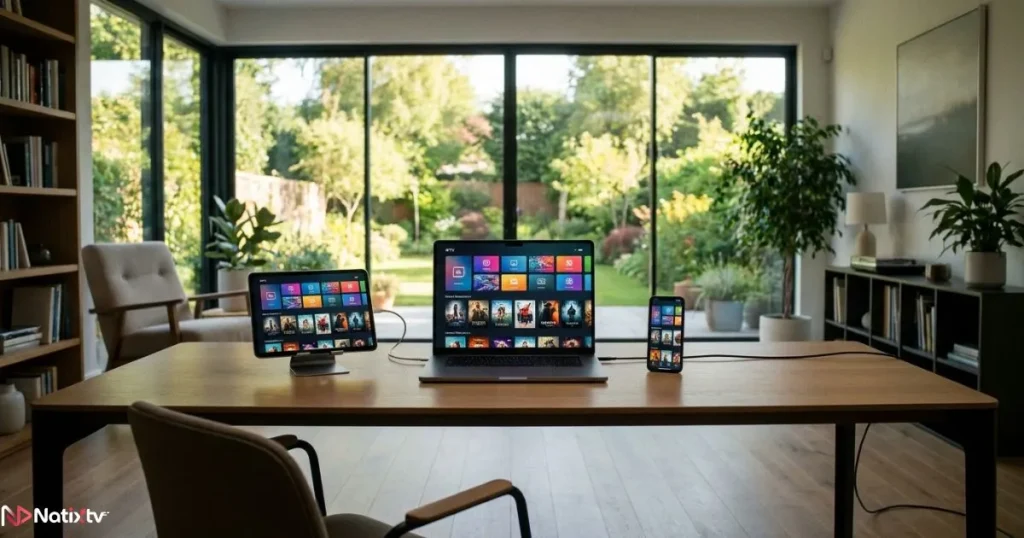
A stable IPTV service isn’t just about picture quality — it also needs to be accessible on every screen you own. The best providers support a wide range of devices without requiring technical expertise to get set up. Here’s what comprehensive device compatibility looks like:
- Smart TVs (Samsung, LG, Android TV)
- Amazon Fire Stick and Fire TV
- Smartphones and tablets (iOS and Android)
- Mag boxes, Formuler, and Enigma2 receivers
- Computers via browser or dedicated app (Windows and macOS)
- Apple TV and Roku devices
You should also look at how the service connects. Support for M3U URLs and Xtream Codes API gives you flexibility to use your preferred IPTV player app. Multi-screen support — allowing two or more simultaneous streams — is essential if your household has multiple viewers.
Natixtv covers all the devices listed above and offers a free trial period of 24 to 48 hours so you can test compatibility on your own setup before committing to a subscription. That kind of confidence in their own product says a lot.
Content Library: The Real Measure of IPTV Streaming Quality
Live TV and International Channels
A quality IPTV service should offer broad geographic coverage — local channels, national networks, and a solid international selection. This matters especially for multilingual households or expats who want access to programming from their home country. News, entertainment, kids’ programming, and documentaries should all be well represented.
Sports Streaming: The Hardest Test for Any Provider
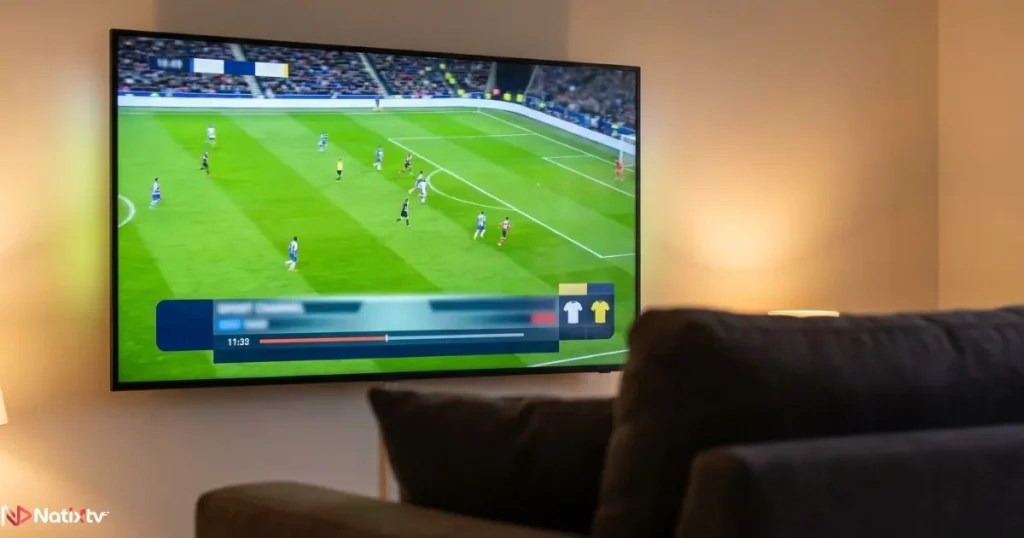
Live sports are where many IPTV providers crumble. The combination of massive concurrent viewers, zero delay tolerance, and high-stakes moments creates a perfect storm for servers that aren’t built for it. Good iptv providers dedicate specific infrastructure to sports streams and often offer multiple backup streams for major events.
Pay-Per-View availability, Premier League coverage, NFL, NBA, UFC — these are the benchmarks. If a service can handle a World Cup final without buffering, it can handle anything. Make sure you know how to avoid IPTV buffering during high-traffic viewing windows — some of those factors are on your end, and knowing both sides makes a real difference.
VOD Library and Catch-Up TV
Beyond live content, a well-rounded IPTV service offers a Video on Demand (VOD) library with movies and series updated regularly. Catch-up TV — which lets you rewatch broadcasts from the past seven days — is another premium feature worth looking for. It turns your IPTV into a proper entertainment hub rather than just a live TV replacement.
Customer Support: Often Overlooked, Always Critical
You won’t think about customer support until something goes wrong. Then it becomes the most important thing in the world. A good IPTV provider offers genuine, responsive support — not just a chatbot that loops you through FAQs.
Here’s what a quality support setup should include:
- 24/7 availability through live chat, email, or Telegram
- Response times under two hours for standard issues
- Clear escalation for technical problems
- Simple account management: renewals, device changes, and sub-account options
- Transparent pricing with no hidden fees or surprise charges
Providers that go quiet after taking your money are a red flag. Good iptv comes with a team that stands behind their product.
Anti-Buffering and Connection Stability Features
Buffering is the enemy of enjoyable streaming, and it has multiple causes. Some are on your side of the connection — a congested Wi-Fi network, an outdated router, or ISP throttling targeting streaming traffic. Others are purely the provider’s problem: overloaded servers, poor CDN integration, or no failover routing.
The best providers implement automatic server failover, which reroutes your stream to a backup server if the primary one becomes unstable. VPN compatibility is also worth checking. Some ISPs throttle IPTV traffic specifically, and using a VPN can restore full speeds. A good iptv service should work reliably with or without a VPN in place.
On your end, a wired ethernet connection will always outperform Wi-Fi for IPTV stability. If you can plug directly into your router, do it — especially for sports or 4K content. According to Ookla’s Speedtest Insights, wired connections can deliver up to 40% more consistent speeds than wireless under the same network conditions.
If you suspect your provider is the issue, it’s worth reviewing what to verify before signing up long-term. A solid resource for this is this checklist of what to verify before ordering an IPTV subscription — it walks through the right questions to ask and the warning signs to watch for.
Pricing, Free Trials, and Real Value
Good iptv doesn’t have to cost a fortune, but it should never be suspiciously cheap. Providers offering full IPTV access for a dollar or two per month are usually cutting corners somewhere — either on server quality, content legality, or support. At the same time, the most expensive service isn’t automatically the best.
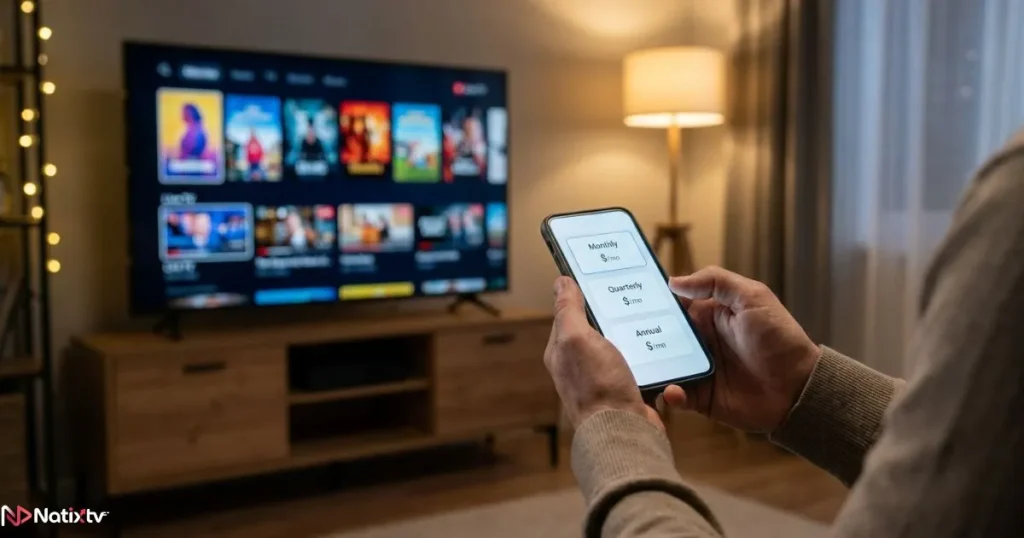
| Plan Type | Typical Price Range | Best For |
|---|---|---|
| Monthly | $10–$20/month | Flexibility, first-time users |
| Quarterly | $25–$50 | Regular users wanting savings |
| Annual | $60–$120/year | Committed users, best value |
| Free Trial | 24–48 hours | Evaluating quality before purchase |
The free trial is where good iptv providers separate themselves from the rest. A genuine trial with full access — no credit card required upfront — shows confidence in the product. Use that window to test the streams you actually watch: your sports channels, your favourite series, your local news. That’s the only meaningful way to evaluate IPTV streaming quality before committing.
Red Flags: Signs You’re Looking at a Bad IPTV Service
Knowing what to avoid is just as important as knowing what to look for. Here are the warning signs that a provider isn’t worth your time or money:
- No free trial or demo period offered
- Customer support that doesn’t respond or uses bots exclusively
- Frequent buffering even during off-peak hours
- An EPG that’s wrong, broken, or months out of date
- Channels listed on the plan that rarely load or drop constantly
- Vague or non-existent refund and cancellation policy
- Inflated channel counts with very poor actual delivery
Good iptv providers are transparent. They show you what you’re getting, let you test it for real, and back it up with genuine support.
Frequently Asked Questions
What makes a good IPTV service stand out from the competition?
Good iptv combines reliable server infrastructure, accurate content delivery, broad device support, and responsive customer service. It’s the sum of all those parts working together consistently — not just one impressive feature surrounded by weak links.
How do I test whether an IPTV provider is truly reliable before subscribing?
Always look for a provider offering a free trial with real access to their full channel lineup. Test during peak hours — evenings and weekends — and specifically check the streams you care about most: sports, HD channels, or any international content you follow regularly.
What internet speed do I need for stable IPTV streaming?
For Full HD (1080p), you’ll need a consistent connection of 15 to 25 Mbps. For 4K content, plan for 50 Mbps or more. A wired ethernet connection will give you more consistent results than Wi-Fi, particularly during peak household usage.
Why does IPTV buffer even when my internet speed is fast?
Fast internet doesn’t guarantee smooth IPTV. Buffering can be caused by server overload on the provider’s side, ISP throttling of streaming traffic, DNS resolution delays, or Wi-Fi instability. A good iptv provider mitigates most of these with redundant servers and smart traffic routing — but some optimisation on your end, like using a wired connection or a VPN, can also help significantly.
How many devices can I use simultaneously with a good IPTV subscription?
Most quality providers offer between one and five simultaneous connections depending on the plan tier. If you have multiple people watching in your home, check specifically for multi-connection plans before subscribing.
Is good IPTV compatible with Smart TVs and Fire Stick devices?
Yes — a reliable IPTV service should natively support Android TV, Samsung and LG Smart TVs, Amazon Fire Stick, and major mobile platforms. Compatibility via M3U and Xtream Codes also allows you to use your preferred IPTV player app across virtually any device.
The Bottom Line: Good IPTV Is Built on Consistency
Good iptv isn’t a single feature or a marketing promise. It’s a consistent, daily experience built on solid infrastructure, honest content delivery, genuine support, and the flexibility to work across all your devices. When every piece is in place, streaming stops being a source of frustration and becomes something you actually look forward to.
The best way to find your fit is to test before you trust. Look for a provider that offers a real free trial, stands behind their service with accessible support, and has the technical backbone to back up their claims. That’s the standard worth holding providers to.
If you’re ready to experience what a well-built IPTV service actually feels like, Natixtv offers subscriptions compatible with all major devices and a free trial of 24 to 48 hours — no guessing, no risk, just good iptv you can evaluate on your own terms.