You know that feeling. You’ve cleared your evening, grabbed your snacks, and settled into the couch for something you’ve genuinely been looking forward to. Then the screen freezes. The spinner appears. The moment is gone. If you’ve ever rage-quit an IPTV session because of endless buffering or a pixelated picture that looked like it was filmed through a shower door, you’re not alone. Millions of viewers deal with this every single day, and most of them don’t realize the problem is entirely avoidable. Finding the buy iptv subscription that genuinely delivers is the first step toward never reliving that frustration again.
The IPTV market in 2026 is enormous. There are hundreds of providers out there, all promising crystal-clear HD and 4K channels, thousands of live streams, and flawless performance. But the gap between a polished promise and a reliable daily experience is wider than most people expect. The difference between a smooth, cinema-quality stream and a choppy, unwatchable mess comes down to specific, measurable factors, most of which you can learn to identify before you ever spend a single dollar.
This guide breaks down exactly what separates the best IPTV streams from the rest. Whether you’re new to IPTV or you’ve been burned by a bad provider before, the information here will help you make a smarter, more confident choice in 2026.
Table of Contents
What Makes a Great IPTV Stream in 2026?
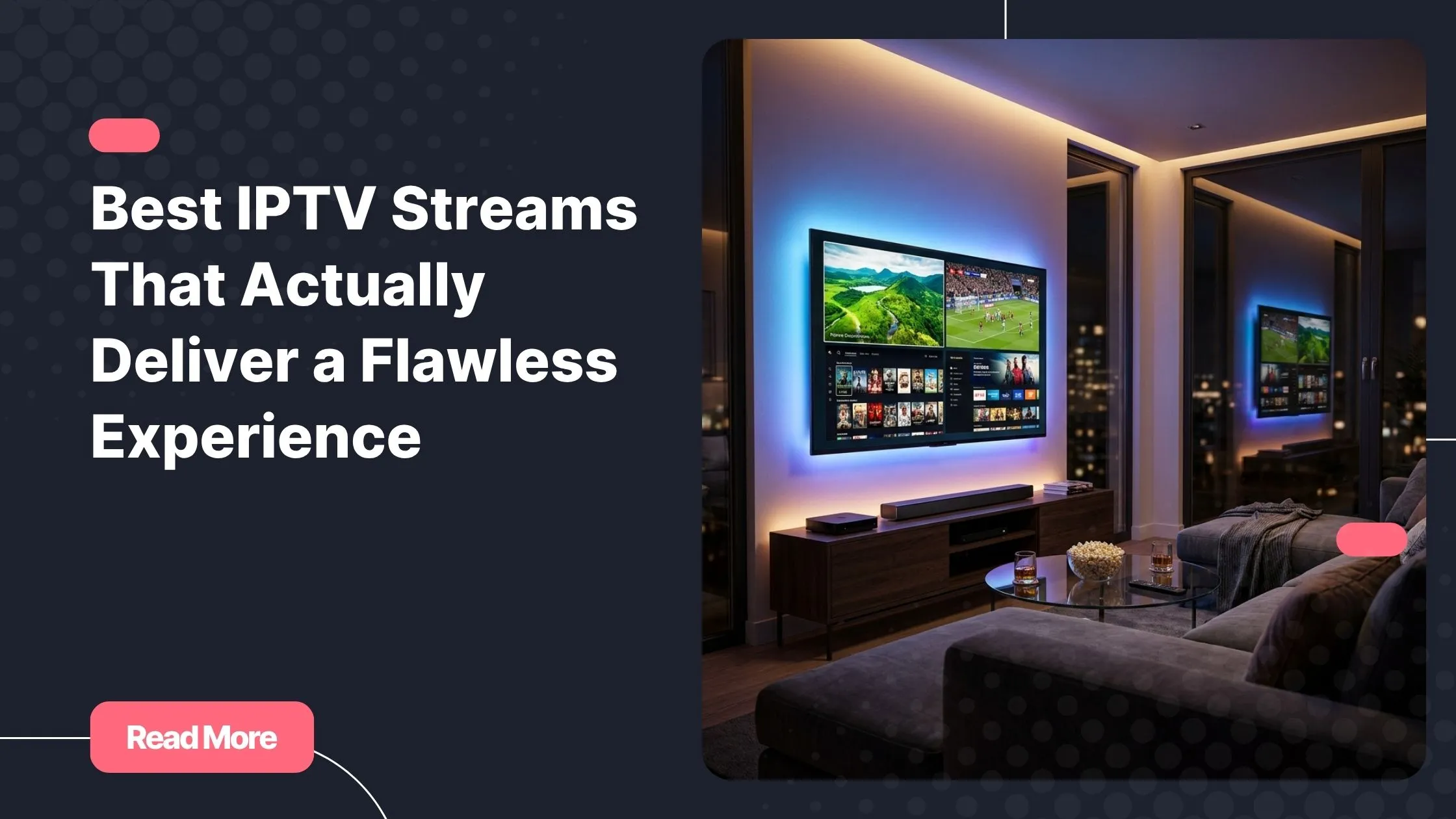
The definition of quality IPTV has shifted significantly over the last few years. In 2026, users expect more than just a working picture. They expect stability during peak hours, true 4K resolution on compatible channels, instant channel switching, and an experience that rivals or outperforms traditional cable. The best IPTV streams today are built on a foundation of robust infrastructure, smart encoding, and genuinely scalable server capacity.
Quality is not just about resolution. A 4K stream that buffers every three minutes is worse than a stable 1080p stream that never skips a beat. What you’re really looking for is a combination of:
- High server uptime and redundancy
- Modern stream encoding (H.265/HEVC or AV1)
- Content Delivery Networks (CDNs) that bring the stream closer to your location
- Load management that handles thousands of concurrent viewers without degrading performance
Understanding these pillars helps you evaluate any provider objectively, not just take their marketing at face value.
The Technical Pillars of IPTV Streaming Quality
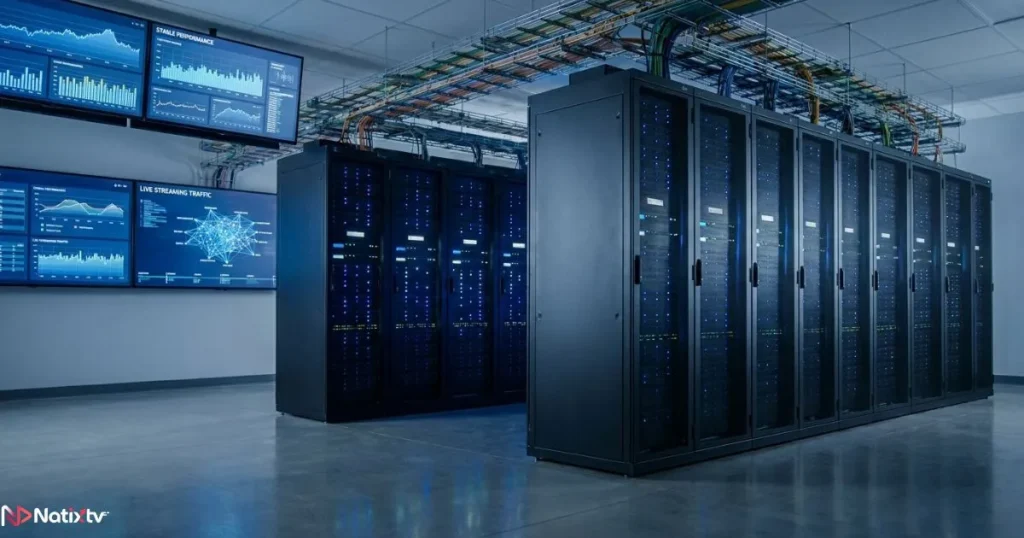
The quality of an IPTV stream is determined by several technical components working together behind the scenes. Understanding these elements makes it easier to identify providers that prioritize performance over marketing claims.
Server Infrastructure: The Backbone of Every Stream
When you press play on a channel, a request travels from your device to a remote server and back again in milliseconds. The quality of that server, and how close it is to you, determines how smooth your experience will be. Providers that invest in CDN infrastructure distribute their servers across multiple geographic regions. This means your stream doesn’t have to travel halfway across the world to reach you.
Uptime is another critical metric that most users overlook. Consider this: a provider with 99.9% uptime loses roughly 8.7 hours of availability per year. A provider with only 98% uptime? That jumps to over 175 hours annually. For live sports, breaking news, or event viewing, those lost hours are not just an inconvenience, they’re a deal-breaker.
Bandwidth and Bitrate: The Numbers That Define Your Picture
Bitrate is the amount of data your stream receives per second. Higher bitrate means more detail, richer color, and smoother motion. But it also means your internet connection needs to keep up. Here’s a quick reference for what you actually need:
| Stream Quality | Minimum Bitrate Required | Recommended Bitrate |
|---|---|---|
| SD (480p) | 2 Mbps | 4 Mbps |
| HD (720p) | 5 Mbps | 8 Mbps |
| Full HD (1080p) | 10 Mbps | 15 Mbps |
| 4K UHD | 25 Mbps | 40 Mbps |
It’s worth noting that your advertised internet speed and your actual usable speed are often different things. Other devices on your network, Wi-Fi interference, and ISP throttling during peak hours can all eat into your available bandwidth. Running a speed test specifically at the time you normally stream is a much more accurate baseline than your plan’s headline number.
Codec Technology: Why H.265 Changes Everything
Codecs are the compression algorithms that encode and decode video. The older H.264 standard is still widely used, but H.265 (also called HEVC) delivers the same visual quality at roughly half the file size. For IPTV, this means less bandwidth consumption per stream without any visible drop in picture quality.
In 2026, AV1 is emerging as the next-generation standard, particularly for IPTV 4K streaming. It offers even greater efficiency than H.265 and is increasingly supported across modern devices. When evaluating a provider, ask whether their premium channels use H.265 or AV1 encoding. It’s a reliable indicator of how seriously they invest in delivery quality.
IPTV Buffering: Why It Happens and How to Stop It
Buffering remains one of the most common frustrations among IPTV users. While many people immediately blame their internet connection, the reality is that multiple factors can contribute to interruptions during streaming.
The Six Most Common Buffering Triggers
IPTV buffering is the single most complained-about issue across every streaming forum and review platform. The good news is that most causes are identifiable and fixable. Here are the six most common culprits:
- Internet speed that falls below the required threshold for your chosen resolution
- An overloaded provider server, especially during major live events
- Shared Wi-Fi bandwidth across multiple devices in your home
- An outdated IPTV player app that isn’t optimized for current stream formats
- ISP throttling during evenings and weekends when network traffic peaks
- Geographic distance between your location and the provider’s main server cluster
The first three are usually on your end. The last three point directly at your provider. If you’ve optimized your home setup and you’re still buffering, the provider is almost certainly the problem. This is exactly why testing before committing matters so much, a point we’ll return to shortly.
Practical Fixes to Eliminate IPTV Buffering
Before switching providers, try these client-side fixes to rule out your own setup as the source of the problem:
- Connect your streaming device via Ethernet instead of Wi-Fi whenever possible
- Switch to a faster DNS server such as 1.1.1.1 (Cloudflare) or 8.8.8.8 (Google)
- Enable QoS (Quality of Service) settings in your router to prioritize streaming traffic
- Clear the cache on your IPTV player app regularly
- Update your IPTV app to its latest version for performance improvements
If none of these changes make a meaningful difference, the issue lives upstream with your provider. Choosing a quality IPTV provider subscription that actively manages server load and offers anti-buffering technology is the most effective long-term solution.
IPTV 4K Streaming: Is Your Setup Ready?
Many viewers assume that subscribing to a 4K IPTV package automatically guarantees a premium viewing experience. In reality, your provider, hardware, and internet connection all need to work together to deliver true 4K quality.
What True 4K IPTV Streaming Actually Requires
The phrase “4K IPTV” is used loosely by many providers. True 4K content is encoded at 3840×2160 resolution with a high enough bitrate to render genuine detail. Upscaled HD passed off as 4K is unfortunately common in the lower-tier market. As of 2026, authentic 4K content accounts for roughly 30 to 35% of premium IPTV channel offerings, and the best IPTV streams in that category are encoded in H.265 or AV1 with HDR10 or Dolby Vision support.
To actually enjoy 4K IPTV, you need three things aligned at once: a 4K-capable display, a streaming device that can decode the codec being used, and an internet connection that can sustain at least 25 Mbps consistently. Missing any one of those three breaks the chain.

Best Devices for 4K IPTV Streaming in 2026
Your hardware choices matter more than most people realize. Here’s how the leading devices compare for IPTV use in 2026:
| Device | 4K Support | HDR Support | AV1 Codec | Price Range |
|---|---|---|---|---|
| Fire TV Stick 4K Max | Yes | HDR10+ | Yes | Mid |
| Nvidia Shield Pro | Yes | Dolby Vision | Yes | Premium |
| Apple TV 4K (3rd gen) | Yes | Dolby Vision | Yes | Premium |
| Android TV Box (mid-range) | Yes | HDR10 | Varies | Budget-Mid |
| Smart TV (built-in app) | Yes | Varies | Varies | Built-in |
If you want to get the most out of your IPTV 4K streaming setup, the Nvidia Shield Pro and Apple TV 4K are the gold standard. Both handle demanding codecs effortlessly and deliver the kind of picture quality that makes the investment worthwhile. For a more budget-conscious option, the Fire TV Stick 4K Max punches well above its price point for everyday use.
It’s also worth understanding how to use your Xtream Codes credentials efficiently across these devices. A solid grasp of how to configure Xtream Codes across your devices can significantly improve your setup and unlock the full range of channels your provider offers.
What Separates a Reliable IPTV Service From a Cheap, Unstable One?
Not all IPTV providers are built the same. Some prioritize infrastructure, support, and long-term reliability, while others focus on attracting users with low prices and inflated channel counts.
The Criteria That Actually Matter
With so many providers on the market, it’s tempting to go with the cheapest option. But low price almost always comes with a trade-off: unreliable servers, poor IPTV channel quality, absent customer support, or a channel list that looks impressive on paper and underperforms in practice. The best IPTV streams don’t come from whoever offers the most channels. They come from providers who have invested in the right infrastructure.
Here’s what a genuinely premium IPTV provider should offer in 2026:
- A server uptime guarantee of 99.9% or higher, backed by redundant systems
- Anti-buffering technology or automatic failover to backup servers
- Authentic HD and 4K encoding on flagship channels, not upscaled SD
- An accurate, live-updated Electronic Program Guide (EPG)
- Compatibility with a wide range of devices including mobile, TV, PC, and MAG boxes
- A free trial period so you can verify performance before subscribing
- Responsive customer support with real turnaround times
Red Flags That Signal a Poor IPTV Provider
On the other side of the spectrum, certain warning signs are almost always predictive of a poor IPTV experience:
- No trial period or testing option offered at any price
- Prices that seem suspiciously low with no clear justification
- A channel list that appears copy-pasted with no original or curated content
- No visible customer support channel, phone number, or live chat
- Streams that perform adequately at 3am but fall apart during prime time
If a provider checks more than two of those boxes, walk away. The short-term savings will cost you far more in frustration.
IPTV Experience: Apps, Performance, and Multi-Device Use
Your IPTV provider is only one part of the overall experience. The apps you use and the devices you watch on can have a major impact on stream quality, responsiveness, and usability.
Why Your IPTV Player App Matters as Much as Your Provider
Even the best IPTV streams can be undermined by a poorly built player app. Your app is responsible for buffering management, EPG display, channel switching speed, and codec handling. In 2026, the top-performing IPTV apps include TiViMate, IPTV Smarters Pro, GSE Smart IPTV, and Perfect Player. Each has its strengths, but TiViMate consistently earns the highest marks for smooth performance, clean interface, and reliable EPG integration.
Channel switching time is a surprisingly important quality-of-life metric. A well-optimized app on a good provider should switch channels in under two seconds. If you’re waiting five or more seconds every time you change a channel, either your app or your provider needs an upgrade.
Multi-Device Compatibility: A Non-Negotiable in 2026
The modern viewer doesn’t watch on one screen. You might start a match on your TV, check an update on your phone, and finish on a tablet. A provider worth your money in 2026 supports simultaneous connections across multiple devices and works natively with Android, iOS, Windows, Smart TVs, MAG boxes, Fire Stick, and more. Always confirm how many simultaneous streams are included in your plan before you commit.
How the Top IPTV Services Compare in 2026
The table below highlights the practical differences between budget, mid-range, and premium IPTV services. These differences become increasingly noticeable during periods of high demand.
| Feature | Budget Provider | Mid-Range Provider | Premium Provider (e.g., Natixtv) |
|---|---|---|---|
| Uptime Guarantee | ~95% | ~98% | 99.9%+ |
| 4K Channel Availability | Limited | Moderate | Extensive |
| Anti-Buffering Technology | No | Partial | Yes |
| EPG Accuracy | Poor | Moderate | High |
| Device Compatibility | Limited | Good | Extensive |
| Free Trial Period | No | Sometimes | Yes: 24 to 48 hours |
| Customer Support | Email only | Email + chat | Live chat + rapid response |
| VOD Library | Basic | Moderate | Extensive + regular updates |
The differences between tiers become especially visible during high-demand moments: championship games, season premieres, breaking news events. That’s precisely when budget providers collapse and the best IPTV streams hold steady.

Frequently Asked Questions
The following answers address some of the most common concerns people have when evaluating IPTV providers and streaming quality.
What are the best IPTV streams available in 2026?
The best IPTV streams in 2026 are defined by server uptime, encoding quality, genuine 4K availability, and reliable IPTV performance under peak load. Providers like Natixtv that invest in CDN infrastructure, H.265 encoding, and 99.9% uptime guarantees consistently deliver the kind of smooth IPTV streams that justify a subscription. Look for a provider that offers a trial period so you can verify quality on your own devices before committing.
Why does my IPTV keep buffering even though my internet is fast?
Fast internet is necessary but not sufficient. If your provider’s servers are overloaded or located far from your region, buffering happens regardless of your connection speed. ISP throttling during peak evening hours is another frequent cause. Try connecting via Ethernet, switching to a faster DNS, and testing the stream at different times of day to isolate whether the issue is on your end or the provider’s.
How much internet speed do I need for 4K IPTV streaming without interruptions?
For consistent 4K IPTV streaming, you need a sustained connection of at least 25 Mbps dedicated to the stream, with 40 Mbps recommended as a comfortable buffer. Keep in mind that other devices using your network simultaneously will reduce the bandwidth available for your stream. A wired Ethernet connection is strongly recommended for 4K. You can verify speeds at Speedtest by Ookla to get an accurate picture of what your connection actually delivers.
How do I know if a provider offers smooth IPTV streams before I subscribe?
The most reliable method is a free trial. Any provider confident in their infrastructure will offer one. During your trial, test streams during peak hours (evenings and weekends), switch channels rapidly to measure switching speed, and check a 4K channel if available. Pay attention to how the stream behaves under realistic conditions, not just at 3am when servers are barely under load.
What devices are compatible with the best IPTV streams in 2026?
Premium IPTV providers in 2026 support a broad range of devices including Android smartphones and tablets, iOS devices, Amazon Fire Stick (all generations), Nvidia Shield, Apple TV, Windows PCs, Smart TVs, and MAG boxes. Always confirm device compatibility before subscribing and look for providers that allow testing across multiple screens during their trial window.
Is IPTV channel quality better than traditional cable or satellite?
In many ways, yes. The best IPTV streams offer more flexibility, a far wider content range, and increasingly superior picture quality for 4K content compared to most cable packages. The key advantage is that IPTV is not tied to a physical infrastructure. The main caveat is that IPTV quality is entirely dependent on your internet connection and your provider, while cable has a more predictable baseline. When both are optimized, IPTV wins on content breadth, cost efficiency, and device flexibility.
Final Verdict: Your IPTV Experience Starts With the Right Choice
If there’s one thing this guide makes clear, it’s that the best IPTV streams are never an accident. They’re the result of deliberate investment in server infrastructure, modern encoding technology, genuine uptime reliability, and a user experience that holds up when it matters most. Channel count is a marketing metric. What you actually watch on is built from bitrate, codec quality, server proximity, and a provider who doesn’t disappear when their servers get overloaded on a Saturday night.
Before you sign up for anything, know what to test: stream stability during peak hours, channel switching speed, 4K performance on your actual device, and how the EPG handles your local programming. These are the real benchmarks. Everything else is noise.
If you’re ready to stop settling for frustrating streams and finally experience what smooth, reliable IPTV feels like, Natixtv is the place to start. With a free trial period of 24 to 48 hours, broad compatibility across every major device, and premium stream quality built for 2026 standards, it’s a risk-free way to see the difference for yourself. Head over and buy iptv subscription today, try it on your own setup, and discover why the best IPTV streams really do change how you watch everything.