Do you remember sitting through a cable outage on the night of a big match, dialing a support line that kept you on hold for forty minutes, all while paying a bill that crept past $160 a month? That frustration is not a niche experience. Millions of households still deal with it every single month, even though a smarter way to watch TV has been quietly maturing for years.
That smarter way is iptv service. IPTV cable is not a gimmick or a workaround. It is a fully realized technology that delivers live channels, on-demand movies, and catch-up content over your existing internet connection, with none of the rigid contracts or overpriced bundles that make traditional cable so exhausting. If you have ever wondered whether the switch is worth it, this guide will give you a clear, honest answer.
By the time you finish reading, you will understand exactly how iptv cable works, how it compares to traditional cable television across every dimension that matters, and what to look for in a provider before you commit to anything. Whether you are a cord-cutter in progress or just curious, keep reading.
Table of Contents
What Is IPTV Cable and How Does It Actually Work?
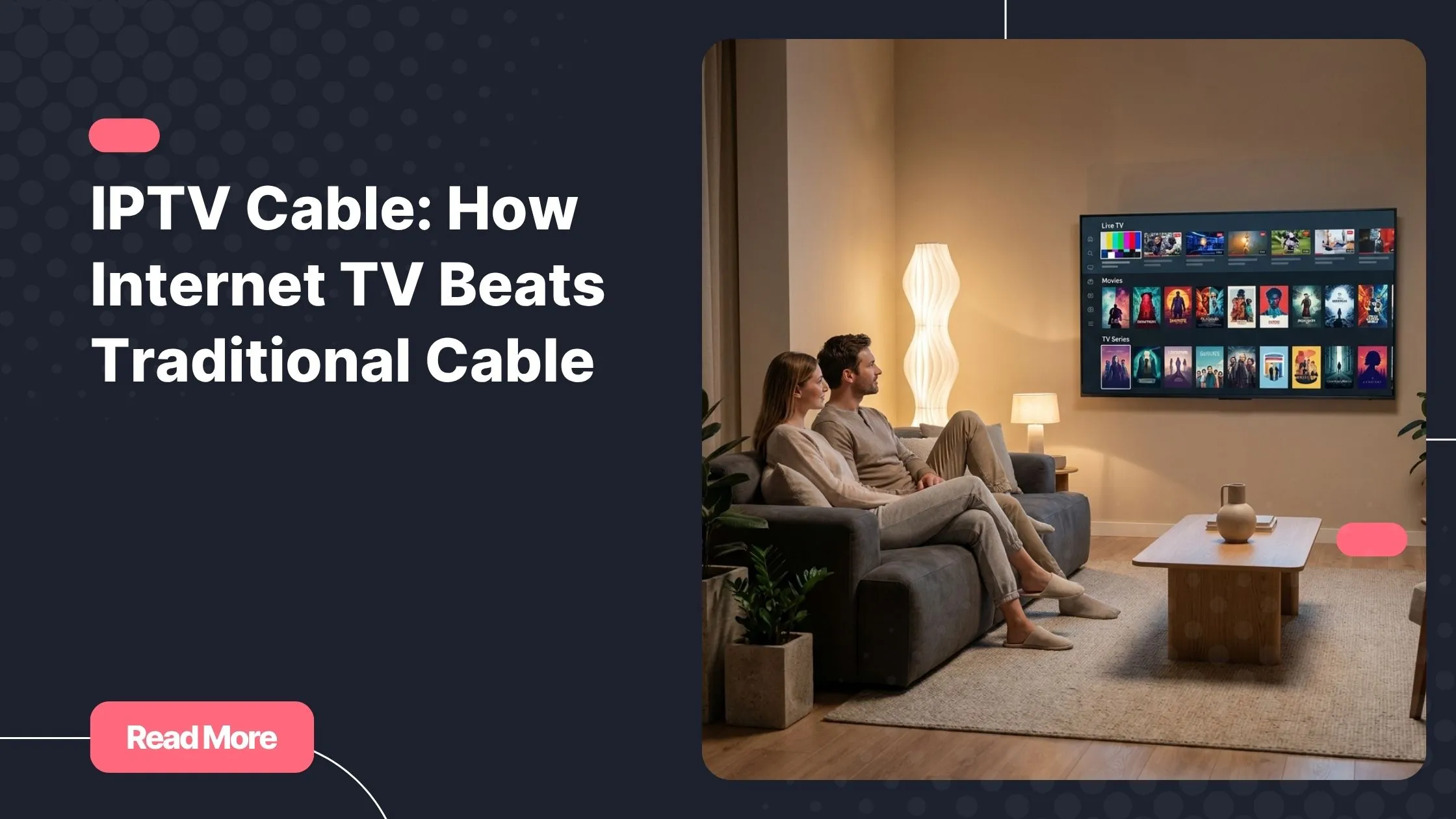
The term iptv cable gets used a lot, but the technology behind it is simpler than it sounds. IPTV stands for Internet Protocol Television. Instead of receiving a broadcast signal through a coaxial cable or a satellite dish, your TV content is delivered as data packets over a broadband internet connection, the same way a webpage or a video call reaches your screen.
The Core Technology Behind IPTV
Every piece of content you stream through an iptv cable service travels as compressed digital data. When you select a channel, the provider’s server sends only that specific stream directly to your device. This is called unicast delivery. By contrast, some IPTV networks use multicast delivery for live broadcasts, sending a single stream to multiple viewers simultaneously to reduce server load.
The practical result is a system that is far more efficient than traditional broadcasting. You are not receiving 500 channels you did not ask for. You are pulling exactly what you choose, when you choose it. The global IPTV market reflects this appeal strongly, with projections pointing beyond $100 billion in value by 2027 as adoption continues to accelerate.
How Traditional Cable TV Works (and Why It Is Aging)
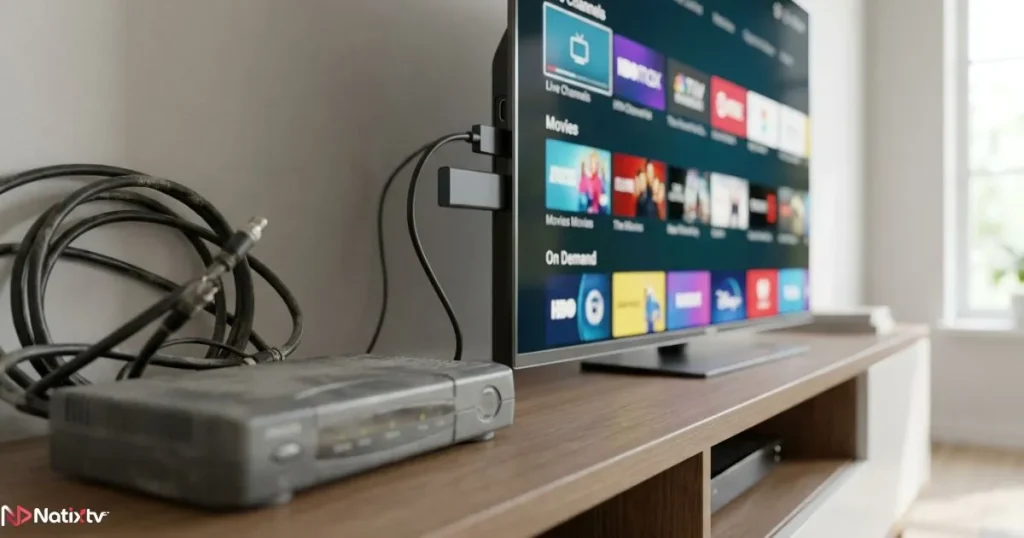
Traditional cable television runs on a fundamentally different model. A cable provider’s headend facility broadcasts every channel in its lineup simultaneously through a coaxial cable network. Your set-top box decodes whichever channel you select, but the signal for all the others is still traveling through the wire into your home whether you want it or not.
This infrastructure requires significant physical investment: underground cabling, local nodes, on-site technician visits, and hardware rentals passed on to you as monthly fees. It also means your service is tied to your geography. Move house, and you start the whole setup process again.
The Core Difference in One Simple Analogy
Think of traditional cable like a water tap left permanently open: water (content) flows constantly regardless of whether anyone is drinking. IPTV cable is more like ordering a specific drink: you request it, the system delivers it, and nothing else is wasted. One model was designed for the broadcast era. The other was built for the internet age.
IPTV vs Cable TV: A Side-by-Side Comparison
When you stack iptv cable against traditional cable television, the differences are hard to ignore. Below is an honest look at where each technology lands across the factors that most affect your daily experience.
| Feature | Traditional Cable TV | IPTV Cable |
|---|---|---|
| Delivery method | Coaxial cable or satellite | Internet connection |
| Channel flexibility | Fixed bundles | Customizable |
| Contract required | Usually 12-24 months | Often month-to-month |
| Average monthly cost | $80-$200+ | $10-$30 |
| Video on demand | Limited | Extensive |
| Device compatibility | Set-top box only | Smart TV, phone, tablet, PC, MAG |
| 4K availability | Selective | Widely available |
| Geographic restriction | Yes – local coverage only | No – global access |
| Installation required | Yes – technician visit | No – self-setup in minutes |
Cost Comparison: What You Really Pay Each Month
The headline price on a cable package rarely reflects what you actually pay. By the time you add equipment rental, regional sports fees, HD access charges, and local taxes, a $60 base plan can comfortably exceed $150 a month. Early termination fees add another layer of risk if your circumstances change.
An iptv cable subscription typically ranges from $10 to $30 per month with no hidden line items. There is no hardware to rent, no technician to tip, and no penalty for leaving. That difference compounds quickly over a year or two.
Channel Selection and Content Flexibility
Cable bundles are built around the provider’s economics, not your preferences. You might pay for 280 channels and regularly watch six. IPTV flips that dynamic. With a quality iptv cable service, you get access to live channels, on-demand libraries with thousands of titles, catch-up TV, and international content from regions across Europe, MENA, Asia, and the Americas, all within a single subscription. Multi-language support is a genuine strength here, making IPTV especially valuable for multilingual households and expat communities.
Picture Quality and Streaming Performance
Modern iptv cable services deliver HD, Full HD, and 4K streams as standard on reputable platforms. Traditional cable distributes 4K selectively and often charges a premium for it. The key variable on the IPTV side is your internet speed. For a smooth HD stream, 10 Mbps is the practical minimum. For 4K, aim for 25 Mbps or above. Most broadband connections in 2025 exceed these thresholds comfortably.
The buffering reputation that some people associate with IPTV stems largely from low-quality providers with underpowered servers. A well-built platform with robust infrastructure delivers a viewing experience that is indistinguishable from, and often crisper than, traditional cable.
Want to know how streaming quality affects your IPTV experience? This guide on what separates top-tier IPTV performance from average providers breaks it down clearly.
Key Benefits of Switching to IPTV
The appeal of iptv cable goes well beyond cost savings. Here is a closer look at the practical advantages that make it a compelling cable television alternative for a growing number of viewers.
Freedom from Long-Term Contracts
One of the most underrated benefits of streaming TV through IPTV is the absence of commitment. No 24-month lock-ins. No early termination clauses. No waiting for an engineer to arrive during a four-hour window. You subscribe when you want, pause when life gets busy, and cancel without penalty. For renters, frequent movers, and travelers, this flexibility alone changes the value equation entirely.
Watch on Any Device, Anywhere
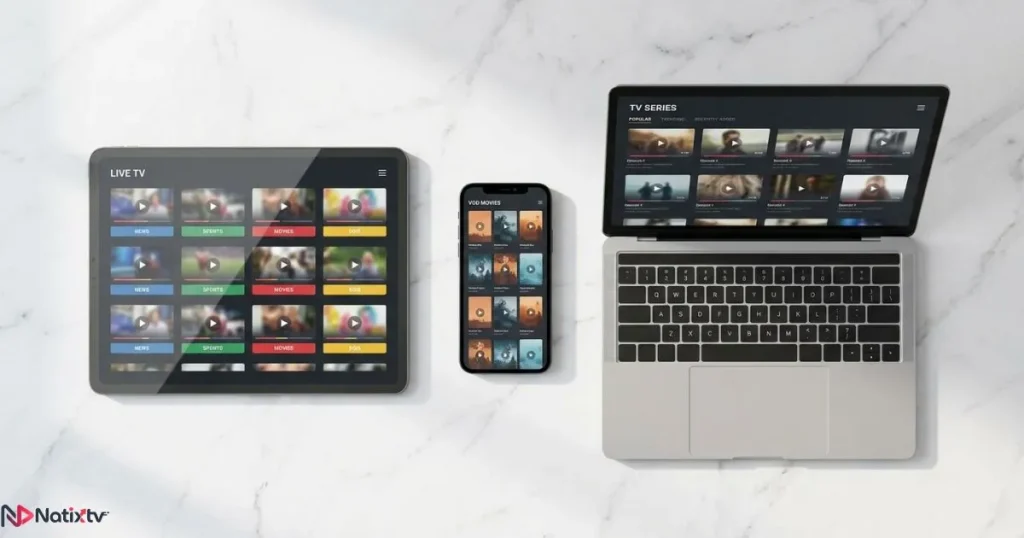
Your iptv cable subscription is not tied to a single television in a single room. You can watch on a Smart TV in the living room, catch up on your phone during a commute, or stream on a laptop from a hotel room abroad. Supported devices typically include:
- Smart TVs (Samsung, LG, Android TV)
- Amazon Firestick and Fire TV
- Android TV boxes and MAG devices
- iOS and Android smartphones and tablets
- Windows and Mac computers via browser or app
Many plans also support multiple simultaneous streams, so different family members can watch different channels on different devices at the same time.
On-Demand Content and Catch-Up TV
Live TV is only part of what makes iptv cable appealing. A well-configured Electronic Program Guide (EPG) gives you the familiar TV guide experience, while catch-up functionality lets you access shows broadcast over the past seven days. Video-on-demand libraries with thousands of movies and series round out the offering. You are not just replacing cable, you are upgrading to a significantly richer content environment.
International and Multilingual Channels
This is where IPTV genuinely outclasses traditional cable. Getting Arabic, French, Turkish, or South Asian channels through a standard cable provider typically means paying for an expensive add-on package, if the option exists at all. With a quality iptv cable service, international content from dozens of countries is part of the standard subscription. For diaspora communities, multilingual families, or anyone who just enjoys foreign cinema and news, this is a transformative difference.
What to Look for in a Quality IPTV Provider
Not all iptv cable services are created equal. The technology is only as good as the infrastructure behind it, so choosing the right provider matters more than most people realize. Before you commit, check these factors carefully. This detailed breakdown of the most important criteria for evaluating IPTV subscription providers is worth reading alongside this section.
Server Stability and Uptime
Server quality is the single most important factor in your IPTV experience. A provider might offer 10,000 channels, but if the servers freeze during a live event, the number is meaningless. Look for providers that are transparent about their uptime guarantees, ideally 99.9% or above, and that deploy anti-freeze and anti-buffering technologies on their streams.
Channel Count vs. Channel Quality
A bigger channel list is not always a better one. What you want is reliable access to the channels you actually watch, delivered in HD or better. Before subscribing, check whether the provider labels stream quality clearly, distinguishing SD, HD, Full HD, and 4K options so you know exactly what you are getting.
Customer Support and Trial Periods
Responsive customer support is a strong signal of a provider’s professionalism. Look for 24/7 availability through live chat or ticketing. More importantly, look for a free trial period. A confident provider will let you test their service before charging you anything.
Natixtv’s iptv service offers a free trial of 24 to 48 hours, which is exactly the kind of commitment-free testing window that lets you evaluate stream quality, server stability, and interface usability with no financial risk whatsoever. That trial period is one of the clearest signs that a provider stands behind its product.
Device and App Compatibility
Confirm that any provider you consider supports the devices you already own. Natixtv is compatible with a wide range of hardware including Smart TVs, Amazon Firestick, MAG boxes, Android, and iOS devices. Setup takes minutes and requires no technical background.
A good rule: if a provider does not offer a free trial and is vague about its server infrastructure, keep looking. The best iptv cable services are confident enough to let their product speak for itself.
Is IPTV Legal? Common Questions and Misconceptions
One question that comes up consistently around iptv cable is whether it is legal. The short answer is yes, but with an important distinction worth understanding.
Legal IPTV vs. Unauthorized Streams
IPTV as a technology is entirely legal. Internet Protocol Television is simply a delivery mechanism, the same one used by major platforms like Disney+, Netflix, and Apple TV+. What determines legality is the licensing arrangement behind the content being delivered.
A legitimate iptv cable provider holds the necessary agreements to distribute the channels in its lineup. A piracy-based service does not. The practical difference for you as a viewer is reliability, quality, and legal standing. Licensed services invest in stable infrastructure because they have a legitimate business to protect. Unlicensed ones do not, which is why their streams tend to be inconsistent and unreliable.
Always choose a provider that operates transparently and can demonstrate the legitimacy of its offering. If a deal looks implausibly cheap or a provider is evasive about its licensing, that is your signal to walk away.
Privacy and Security Considerations
Your iptv cable subscription uses your home broadband connection, which means your internet service provider can see that you are streaming content. Some viewers choose to use a VPN alongside their IPTV service for an additional layer of privacy. In terms of data usage, streaming in HD consumes roughly 3-5 GB per hour, while 4K sits closer to 15-20 GB per hour. If your broadband plan has a data cap, this is worth factoring into your viewing habits.
How to Get Started with IPTV Today
Switching from traditional cable to iptv cable is considerably easier than most people expect. You do not need a technician, specialist hardware, or a technical background. Here is everything you need and how to set it up.
What You Need to Start
- A stable internet connection – minimum 10 Mbps for HD, 25 Mbps for 4K
- A compatible device: Smart TV, Firestick, Android box, MAG device, phone, or laptop
- A subscription from a trusted iptv cable provider
- Optional: a VPN for added privacy on your connection
Your speed matters more than your hardware. Most people watching on a modern broadband connection are already well above the minimum threshold, especially if they are already streaming other services without issue.
10 Mbps
Minimum for HD streaming
25 Mbps
Recommended for 4K streaming
50 Mbps
Ideal for multi-device households
Step-by-Step Setup Overview
- Choose a reliable iptv cable provider (such as Natixtv) and start with the free 24-48 hour trial
- Select your subscription plan based on the channels and devices you need
- Receive your login credentials by email within minutes of subscribing
- Install the IPTV app on your chosen device (most providers offer setup guides)
- Enter your credentials, browse your channel list, and start watching
Natixtv: A Trusted IPTV Cable Alternative
Natixtv is the iptv cable provider behind this article and a platform worth your attention if you are serious about making the switch. The service combines a broad, high-quality channel library with server infrastructure built for reliability. Streams are labeled clearly by quality, the interface is straightforward on every supported device, and the pricing reflects real value rather than inflated bundle logic.
The free 24 to 48 hour trial removes every barrier to trying it out. You do not need to enter payment details upfront or commit to anything before you have seen the service in action on your own screen, with your own internet connection. That kind of transparency is rare, and it reflects a level of confidence in the product that should reassure you.
Ready to Leave Overpriced Cable Behind?
Test Natixtv with a free 24-48 hour trial and experience iptv cable at its best, with no commitment and no credit card required to get started.Start Your Free Trial
Frequently Asked Questions
What exactly is iptv cable and how is it different from regular cable TV?
IPTV cable is a television delivery system that sends content over your internet connection using Internet Protocol, rather than through a physical coaxial cable or satellite signal. Traditional cable broadcasts every channel continuously through fixed infrastructure. IPTV delivers only the stream you request, on demand, to any compatible device. The result is greater flexibility, lower cost, and access to a much wider range of content, including live TV, on-demand libraries, and international channels.
Is iptv cable cheaper than a traditional cable subscription?
In almost every real-world comparison, yes. A standard cable package with sports, HD access, and equipment rental typically exceeds $100-$150 per month once all fees are included. A quality iptv cable subscription usually costs between $10 and $30 per month, with no equipment to rent, no installation fees, and no early termination penalties. Over a year, the savings are substantial.
Do I need special equipment to use IPTV at home?
No specialist hardware is required. If you already own a Smart TV, Amazon Firestick, Android box, MAG device, smartphone, or a computer, you have everything you need. Natixtv supports all of these devices with straightforward app-based setup. The only other requirement is a broadband connection of at least 10 Mbps for HD content.
Can I watch live sports and news with an IPTV subscription?
Yes. Live channels, including major sports networks and 24-hour news channels from around the world, are a core part of any legitimate iptv cable service. A well-configured Electronic Program Guide gives you a familiar TV schedule to navigate live broadcasts, and many providers include sports packages covering football, basketball, tennis, and more as part of their standard plans.
Is IPTV legal to use?
IPTV as a technology is completely legal. What matters is whether the provider you choose holds proper licensing agreements for the content it distributes. Established services like Natixtv operate legitimately. Unlicensed piracy-based services are a different matter and carry legal and security risks. When in doubt, look for a provider that operates transparently, offers real customer support, and stands behind its service with a trial period.
How much internet speed do I need for iptv cable to work properly?
For HD streaming, 10 Mbps is the practical minimum. For Full HD across multiple devices, 20-25 Mbps provides a comfortable buffer. For 4K content, aim for at least 25 Mbps on the device doing the streaming. Most modern broadband plans in 2025 exceed these figures. You can run a quick speed test before subscribing to confirm your connection is up to the task.
Conclusion: The Smarter Way to Watch Is Already Here
The comparison between iptv cable and traditional cable television does not produce a close result in 2025. IPTV delivers more content, greater flexibility, better value, and a viewing experience that travels with you on any device to any location. Traditional cable, for all its familiarity, is a system designed for a different era, and its pricing reflects the cost of maintaining infrastructure that the internet has made redundant.
If you are still paying for a cable bundle that does not serve you well, the switch is simpler than you might expect. You do not need new hardware, a technician visit, or a long-term commitment. You need a good internet connection, a compatible device, and a trustworthy provider. The iptv service offered by Natixtv covers all three of those bases, with a free 24 to 48 hour trial that lets you verify the quality of the experience before spending a single cent.
Television on your terms, at a fraction of the cost, on every screen you own: that is what iptv cable makes possible. The only question left is whether you are ready to make the switch.
External reference: For a broader perspective on how IPTV technology is reshaping the global television industry, the Statista overview of global video streaming trends provides authoritative market data and adoption statistics worth exploring.