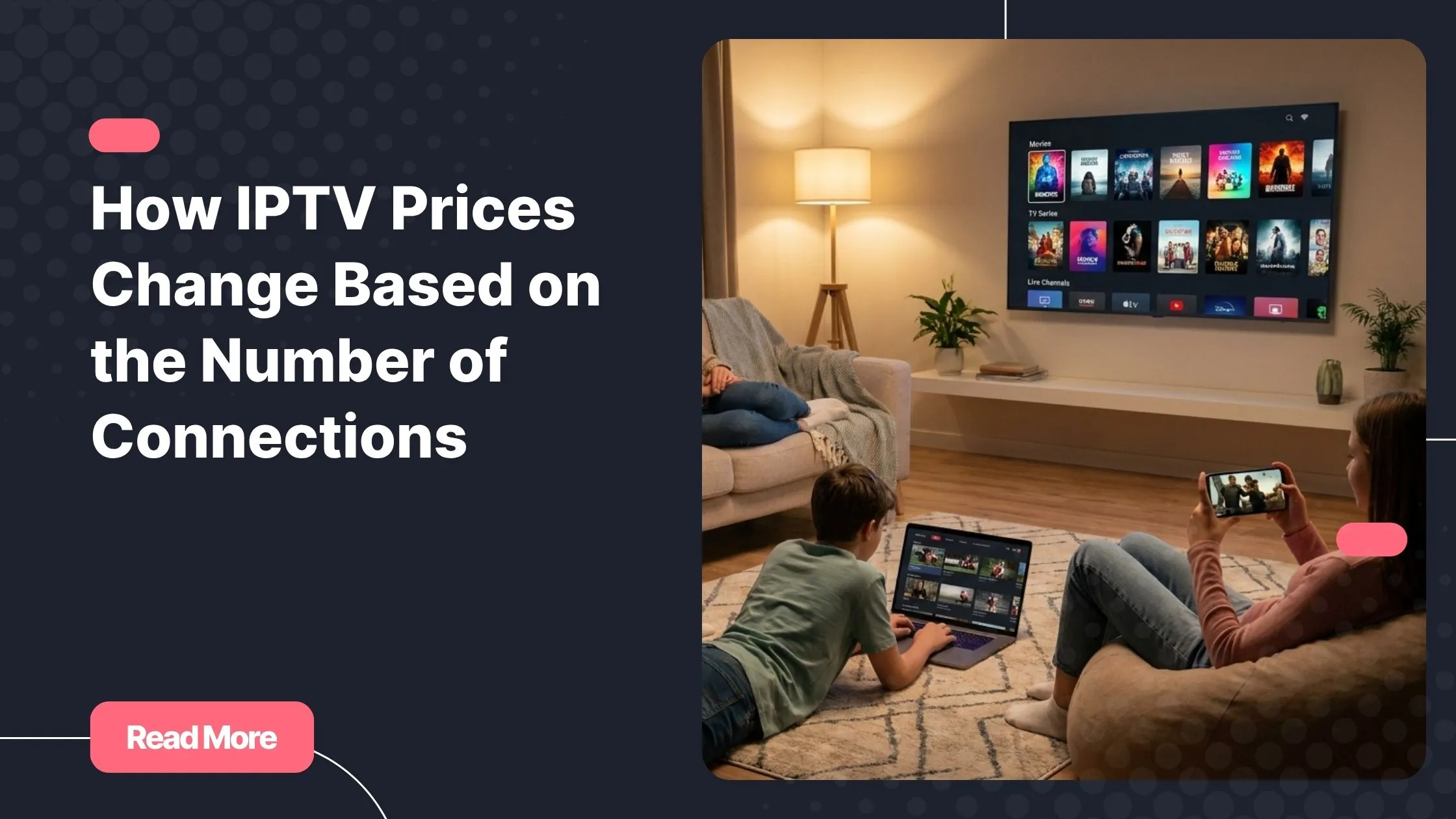
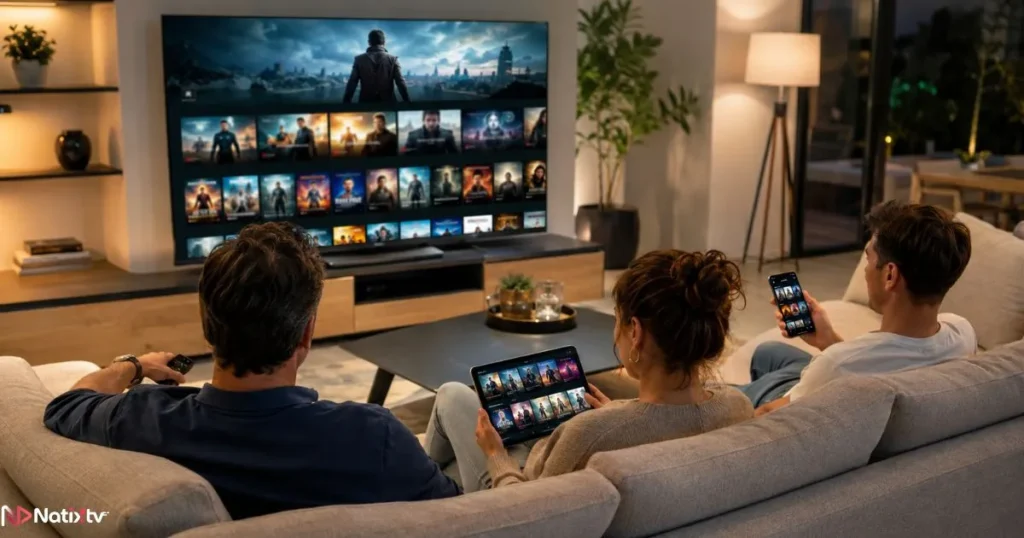
Picture a typical Friday night at your place. Your partner has finally settled in front of the TV for that series they’ve been following all week. Your teenager has disappeared into their room, remote in hand. And you? You just want to catch a live match on your tablet before bed. Three screens. Three people. One subscription — or so you hoped.
This is the reality for millions of households today, and it is exactly where most people run into trouble with their IPTV service. Choosing the right plan is not just about finding a low monthly rate. It is about understanding how IPTV prices scale with the number of simultaneous connections you actually need. Get that wrong, and you are either paying for streams nobody uses, or constantly bumping someone off mid-episode.
As a trusted Iptv Provider, we have put together this complete guide to help you decode connection-based pricing, compare your options clearly, and choose a plan that genuinely fits your home. Let’s start from the beginning.
Table of Contents
What Is an IPTV Connection and Why Does It Matter?
Before you compare any numbers, it helps to get one key concept right: the difference between a device and a connection.
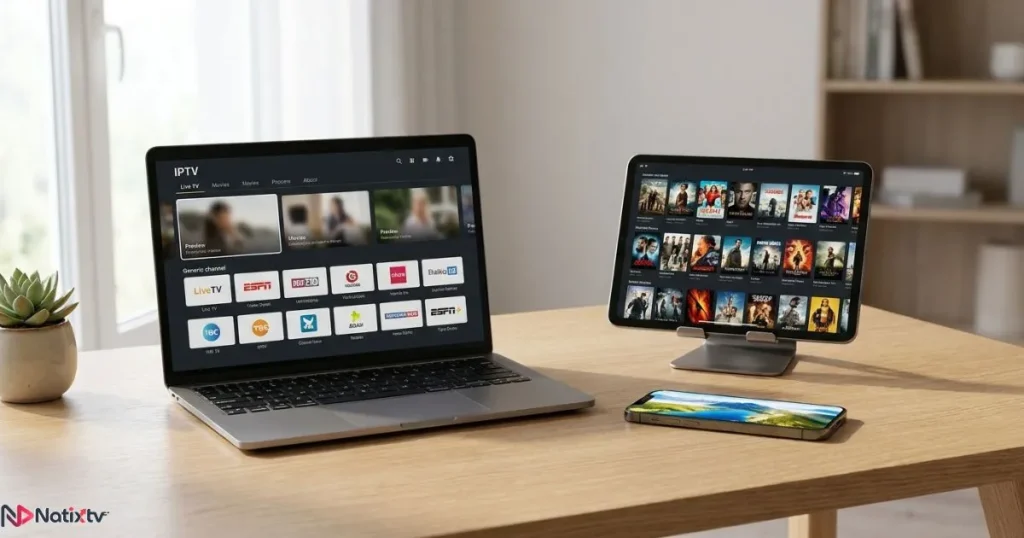
A connection, in IPTV terms, refers to one active stream running at a given moment. You might install your IPTV app on five devices in your home — Smart TV, Android box, two phones, and a tablet — but if your plan only covers one connection, only one of those devices can be streaming at any time.
Think of it like a streaming platform with profile limits. You can have accounts on multiple gadgets, but the number of simultaneous streams is what the provider actually sells you. That is why IPTV simultaneous connections are the real unit of measure behind every pricing tier.
Understanding this distinction is the single most important step before you compare any IPTV subscription plans. It keeps you from paying for something you do not need, and from under-buying something your household actually requires every evening.
How IPTV Prices Are Structured by Number of Connections
Most IPTV providers, including Iptv Provider platforms like Natixtv, organize their offers into clear tiers based on the number of simultaneous streams allowed. The good news: IPTV prices do not simply double as you add connections. The cost per additional stream tends to decrease, which makes upgrading to a higher tier a genuinely smart investment for larger households.
Single Connection Plans
A one-connection plan is the entry point for most IPTV services. It is ideal for:
- Solo viewers who watch on a single device
- Couples who never need two streams at the same time
- Anyone testing IPTV for the first time
The price is the lowest available, and the service covers one device at a time — whether that is your Smart TV, a Firestick, a smartphone, or a PC. The only real limitation is that the moment a second person wants to watch something different, one of you has to wait.
Dual Connection Plans
The two-connection plan is the most popular choice across households, and for good reason. The IPTV prices per connection drop compared to the single tier, making it more economical per stream even if the total is slightly higher.
A dual plan works well for:
- Couples who often watch different content simultaneously
- A parent and child using the TV and a tablet at the same time
- Someone who wants one stream at home and one on their phone while traveling
Typically, the price of a two-connection plan is around 1.4 to 1.6 times a single plan — never double. That efficiency is what makes it the default recommendation for most users.
Triple and Quad Connection Plans
Once your household includes teenagers or multiple independent viewers, a three- or four-connection plan becomes the practical choice. The multi-device IPTV cost continues to improve on a per-stream basis as you move up.
These plans suit:
- Families with two to three children who each watch their own content
- Households where parents and kids regularly watch separately in different rooms
- Shared apartments with three to four independent residents
At this tier, you are getting strong value per stream, especially when you factor in annual billing discounts.
Plans With 5 or More Connections
For power users, large shared households, or anyone managing an IPTV setup across many screens, some providers offer plans at five connections and beyond. The IPTV connection pricing at this level gives the lowest cost per stream of any tier, though the absolute monthly price is naturally higher.
If you are unsure whether a long-term multi-connection commitment makes sense for you, it is always worth exploring whether a long-duration IPTV subscription is a financially sound choice before committing to any tier.
IPTV Price Comparison by Number of Connections
To give you a clearer picture, here is a general overview of how IPTV prices typically scale across connection tiers. These are representative ranges and may vary by provider, content package, and subscription length.
| Connections | Typical Monthly Price | Best For | Est. Cost Per Stream |
|---|---|---|---|
| 1 Connection | €5 – €10/month | Solo viewers | €5 – €10 |
| 2 Connections | €8 – €15/month | Couples / small households | €4 – €7.50 |
| 3 Connections | €12 – €20/month | Average families | €4 – €6.67 |
| 4 Connections | €15 – €25/month | Larger families | €3.75 – €6.25 |
| 5+ Connections | €20 – €35/month | Power users / shared housing | €4 – €7 |
Note: Prices are indicative ranges and vary based on provider, content library, stream quality, and subscription duration. Always confirm directly with your chosen provider.
What Else Affects Your IPTV Subscription Cost?
The number of connections is the main variable in IPTV pricing, but it is not the only one. Several other factors influence how much you will pay each month.
Subscription Duration
Almost every IPTV provider offers significant discounts for longer commitments. The IPTV subscription cost you pay monthly drops considerably when you choose a quarterly, semi-annual, or annual plan.
- Monthly billing: Maximum flexibility, highest rate per month
- 3-month plan: Typically 10-15% cheaper per month
- 6-month plan: Around 20-25% savings per month
- 12-month plan: Often 30-40% cheaper than the monthly rate
If you are confident in a service after testing it, committing annually is almost always the most cost-efficient decision.
Stream Quality: SD, HD, FHD, and 4K
The picture quality you select also plays a role in overall cost. Standard definition plans are the cheapest, while 4K UHD plans require higher bandwidth and often carry a small premium.
- SD: Lowest price, limited visual quality
- HD / FHD: The standard for most modern households
- 4K UHD: Best quality, requires a fast internet connection and a compatible device
Choosing 4K on a multi-connection plan amplifies the bandwidth demand, so make sure your home internet can handle simultaneous 4K streams before upgrading.
Content Library and Channel Packages
A basic plan with 2,000 channels will cost less than a premium package including 20,000 channels, sports add-ons, and a deep VOD library. The breadth of content is a real differentiator, and it is worth paying more for a richer library if you have diverse viewing habits across your household.
Understanding how your provider’s backend infrastructure is set up can also help you evaluate quality. If you want to go deeper on what powers a stable IPTV experience, this overview of reliable streaming infrastructure and server technology gives useful context.
How to Choose the Right Number of Connections for Your Household
This is where the decision becomes personal. Here is a simple framework to assess your real needs before you commit to any IPTV multi-screen plan.
Step-by-Step: Assess Your Viewing Habits
- Count simultaneous viewers: How many people in your household might be watching at the same time during peak hours (evenings and weekends)?
- List your devices: Smart TV, Firestick, Android box, phones, tablets, laptops — which ones will actually be in use?
- Identify peak overlap: Does everyone tend to watch at the same time, or are schedules spread throughout the day?
- Decide on quality: Will all viewers need HD or 4K, or will some be fine with standard quality on a phone?
- Match to a tier: Use your answers to pick the connection count that covers your peak demand without excess.
Household Profiles and Recommended Plans
| Household Profile | Recommended Connections | Reason |
|---|---|---|
| Single person | 1 | Only one viewer at a time |
| Couple | 1-2 | Rarely need different content simultaneously |
| Family of 4 | 3-4 | Kids and parents often watch separately |
| Shared flat (3-5 people) | 4-5 | Multiple independent viewers at any time |
| Home + mobile use | 2 | One at home, one on the go |
Multiple Single Plans vs. One Multi-Connection Plan: Which Saves More?
Here is a question that comes up often: is it cheaper to buy two separate single-connection subscriptions rather than one two-connection plan?
Almost never. Here is why:
- Two individual plans typically cost 1.8 to 2 times a single plan’s price combined
- A dual-connection plan costs roughly 1.4 to 1.6 times a single plan
- A single multi-connection account means one billing date, one customer support contact, and one management panel
- Some providers also restrict account sharing across separate subscriptions
From a pure cost perspective, the IPTV prices per connection on a bundled multi-screen plan are always more favorable than running parallel individual accounts. If your household has two or more regular viewers, upgrading your connection tier is the smarter financial move every time.
Why Natixtv Is a Smart Choice for Multi-Device IPTV Users
Natixtv is built with multi-device households in mind. Whether you are a solo viewer looking for an affordable entry plan or a family that needs four screens running simultaneously on a Friday night, the platform offers flexible IPTV multi-screen plans that scale without forcing you to overpay.
Here is what makes Natixtv stand out among IPTV prices in the market:
- Wide device compatibility: Works on Smart TVs, Android TV, Firestick, MAG boxes, smartphones, tablets, PC, and Mac
- Stable, premium servers: Engineered to handle multiple simultaneous streams without buffering
- Transparent pricing: Clear tiers from single to multi-connection with no hidden fees
- Rich content library: Thousands of live channels, sports packages, and VOD content
- Free trial period of 24 to 48 hours: Test the service on your actual devices before committing to any paid plan
- Dedicated customer support: Assistance available when you need to set up or troubleshoot across devices
Ready to see how it works on your devices?
Try Natixtv free for 24 to 48 hours and find the right multi-connection plan for your household — no commitment required.
Frequently Asked Questions
How do IPTV prices change depending on the number of connections?
IPTV prices are structured in tiers based on how many streams you need running simultaneously. The more connections you add, the lower the cost per individual stream becomes. A two-connection plan typically costs around 1.4 to 1.6 times a single plan rather than double, making it more economical per screen. This tiered structure means upgrading is financially logical as soon as your household regularly needs two or more streams at the same time.
What exactly does “simultaneous connections” mean in an IPTV plan?
A simultaneous connection refers to one active stream at a given moment. If your plan covers three connections, three devices in your home can each be streaming different content at the same time. You can install the IPTV app on as many devices as you like, but only the allowed number of streams can run concurrently. Exceeding that limit usually results in one stream being interrupted or blocked until another stops.
Is it better to buy two single plans or one dual-connection IPTV plan?
A single dual-connection plan is almost always the better choice. The multi-device IPTV cost on a bundled plan is lower per stream than combining two individual subscriptions. On top of the savings, you simplify billing and account management. Running two parallel single accounts costs more and adds unnecessary complexity.
Do IPTV prices vary based on stream quality like HD or 4K?
Yes, stream quality is one of the factors that can affect your IPTV subscription cost. Standard definition plans are the most affordable. HD and Full HD are the standard for most modern households and come at a moderate price. 4K UHD plans are typically the most expensive tier and also require a faster internet connection. Running multiple 4K streams simultaneously amplifies bandwidth usage significantly, so both your plan and your internet connection need to be capable.
How many IPTV connections do I actually need?
Start by counting the maximum number of people in your household who might be watching at the same time during peak hours like evenings and weekends. A couple who rarely watches separately needs one or two connections. A family of four with teenagers almost always benefits from three or four. A shared flat with five independent residents should consider a five-connection plan. It is better to match your real peak demand than to cut costs on too few streams and disrupt your household’s viewing experience.
Can I test a multi-connection IPTV plan before paying?
Yes, and this is strongly recommended. Testing your service on your actual devices in your home environment is the best way to confirm that streams are stable across multiple connections before committing to a paid plan. Natixtv offers a free trial period of 24 to 48 hours specifically so you can validate performance, compatibility, and stream quality with no financial risk. You can evaluate the IPTV prices against the real experience before making any decision.
Conclusion: Find the Plan That Fits How You Actually Watch
The key takeaway from everything above is simple: IPTV prices are not just about finding the cheapest monthly rate. They are about finding the right ratio of connections to your real-world viewing habits. Pay for too few, and someone in your household is always waiting. Pay for too many, and you are wasting money every month on streams that sit idle.
Take a few minutes to map out your household’s peak viewing moments, count the screens that are regularly in use at the same time, and match that to a plan tier. The cost-per-stream math almost always points to a multi-connection plan as the most logical choice for families and shared households, especially when annual billing discounts are factored in.
If you are ready to experience flexible, stable, multi-device streaming, visit Iptv Provider and start your free 24 to 48-hour trial today. There is no better way to know which plan is right for your home than testing it on your own screens, at your own pace, before spending a single euro.
Watching TV together, or separately, should never be a source of frustration. The right IPTV plan simply adapts to how your household lives.
External reference: For a broader understanding of how IPTV technology works and how it compares to traditional broadcasting, the Ofcom Connected Nations Report provides reliable data on internet-delivered TV consumption trends across households.