Picture this: it’s Friday night, you’ve finally settled onto the couch after a brutal week, snacks in hand — and the stream freezes. Again. Or worse, it simply never loads. That single moment of frustration is not caused by your television, your remote, or your internet connection. It’s caused by the invisible engine running beneath every streaming experience: the IPTV server software powering the service you’re using. When that engine is weak, everything falls apart. When it’s solid, you don’t even notice it exists — and that’s exactly the point.
Whether you’re a viewer tired of broken streams or a provider trying to keep thousands of subscribers happy, understanding what separates great IPTV server software from mediocre solutions is the difference between loyalty and churn. The market has matured fast. In 2026, there are more options than ever, which makes choosing the right one harder, not easier. This guide is here to cut through the noise. Top rated IPTV experiences don’t happen by accident — they’re built on the right infrastructure, the right platform, and the right software decisions made before a single stream ever starts.
By the time you reach the end of this article, you’ll know exactly what to look for, what to avoid, and how to match a solution to your real-world needs. No filler. No jargon walls. Just clear, practical guidance you can act on today.
Table of Contents
Basics What Is IPTV Server Software and Why Does It Matter in 2026?
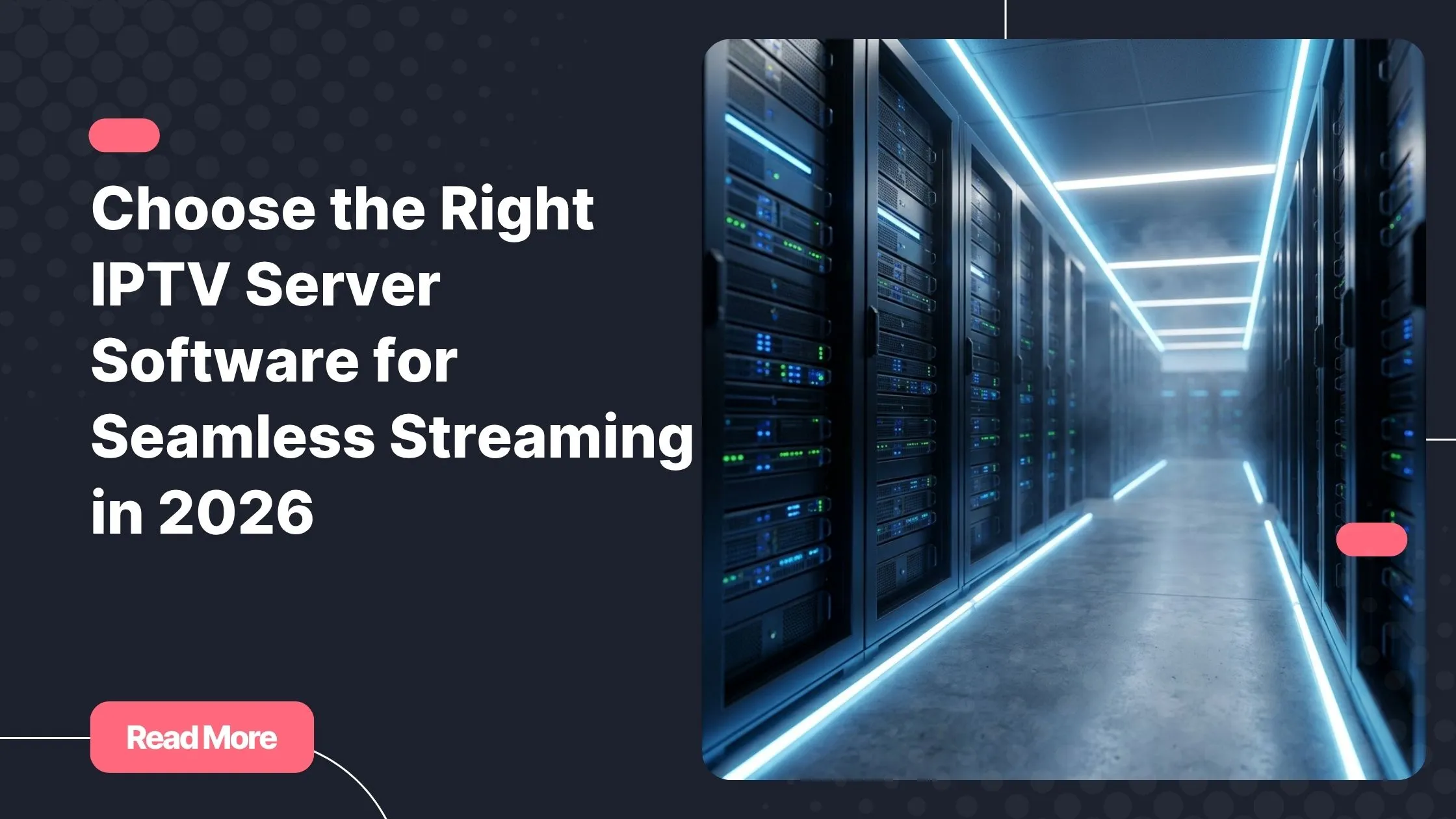
At its core, IPTV server software is the technology that receives video content — whether live TV channels or on-demand files — encodes or transcodes it, and delivers it over an IP network to your device. Unlike traditional cable or satellite, which push signals through fixed infrastructure, IPTV works through internet protocols. That flexibility is its greatest strength. But it also means everything depends on the software managing the process.
The global IPTV market is projected to surpass $115 billion by 2026, according to industry analysts at Grand View Research. With that kind of growth comes intense competition among providers and operators. The tools they use — the IPTV streaming server, the middleware layer, the content management interface — directly shape whether subscribers stay or cancel after the first month.
In simple terms: the solution you choose is not just a background process. It is the product. And in 2026, with 4K streams, multi-device households, and viewers expecting zero buffering, choosing the right one is a strategic decision with long-term consequences.

Architecture Key Components of a Complete IPTV Server Setup
Before evaluating specific software products, it helps to understand the building blocks. A professional IPTV platform is not a single piece of software — it’s a stack of interdependent components, each doing a distinct job.
The IPTV Streaming Server
This is where content ingestion begins. The streaming server receives raw video feeds from broadcasters or content libraries, encodes or transcodes them into delivery-friendly formats, and pushes them out to viewers. It must support key protocols including HLS, MPEG-DASH, RTMP, and RTSP to stay compatible with modern players and devices. For live sports or news, low-latency delivery is non-negotiable — a 30-second delay on a live football match is unacceptable to most viewers.
IPTV Middleware
Think of IPTV middleware as the brain of the operation. It sits between the streaming server and the end user, managing authentication, subscription validation, Electronic Program Guide (EPG) data, parental controls, and channel grouping. When you log into a streaming app and your channels, history, and subscription level load correctly — that’s the middleware doing its job silently and accurately. A well-built middleware layer is what turns a raw video feed into a polished user experience.
The IPTV Panel
Your IPTV management panel is the control room. It’s where you — or your team — manage subscribers, assign packages, handle billing cycles, monitor active sessions, and generate reports. A good panel separates admin-level controls from reseller-level access, so you can delegate without losing oversight. Poorly designed panels cost operators hours every week in manual workarounds. A clean, intuitive IPTV panel is not a luxury. It’s an operational necessity, especially if you’re managing subscriptions at scale.
IPTV Hosting Infrastructure
The software stack runs on servers, and where those servers live matters enormously. IPTV hosting can be deployed on dedicated bare-metal servers for maximum control, on cloud platforms for scalability, or through CDN-integrated hybrid setups for geographic reach. For any operator with subscribers across multiple regions, CDN integration is not optional — it’s the mechanism that ensures a viewer in Morocco gets the same buffer-free experience as one in France. Uptime guarantees should realistically target 99.9% SLA or better.
Evaluation 7 Criteria That Actually Matter When Choosing IPTV Server Software
Not all IPTV server software is built the same. These seven criteria are the ones that separate services that scale gracefully from the ones that crack under pressure.
- Scalability – Can the system handle 200 concurrent viewers today and 20,000 tomorrow without a full rebuild? True scalability means horizontal expansion without downtime.
- Multi-device and multi-format support – Your subscribers use Smart TVs, Android boxes, Firestick, MAG devices, iOS and Android phones, and browsers. Your IPTV streaming server must speak to all of them without requiring separate configurations for each.
- Transcoding capabilities – Adaptive bitrate streaming ensures that a viewer on a slow connection still gets a watchable picture. The best platforms dynamically switch between 4K, HD, and SD outputs in real time based on available bandwidth.
- EPG and VOD management – A well-organized Electronic Program Guide is a major driver of user satisfaction. The software should make it easy to update channel schedules, link metadata, and organize a video-on-demand library intuitively.
- Security and anti-piracy tools – Stream encryption, token-based authentication, DRM support, and concurrent login limits are not optional extras. Without them, your content will be redistributed without your knowledge or consent.
- Analytics and reporting – Real-time dashboards showing active sessions, bandwidth consumption, peak usage windows, and subscriber behavior let you make data-driven decisions — not guesses.
- Support and update cadence – Software that isn’t actively maintained becomes a security liability. Choose platforms with documented update histories, responsive support channels, and an active development roadmap.
Important: Never choose a streaming solution based on price alone. Underpowered tools often collapse during peak traffic moments — like a major sports event — precisely when reliability matters most to your subscribers.
Solutions Types of IPTV Server Software Available in 2026
The market in 2026 breaks down into four broad categories. Understanding what each one offers — and where it falls short — helps you match your choice to your actual situation.
Open-Source IPTV Solutions
Tools like Flussonic, Nimble Streamer, and tvheadend give technically capable teams full control over every component of their IPTV platform. You can customize the stack, optimize for your specific use case, and avoid licensing fees. The trade-off is clear though: you need an experienced engineering team to set it up, secure it, and maintain it. For independent developers or ISPs with in-house technical staff, open-source is a powerful foundation. For everyone else, it often becomes a maintenance burden that distracts from growth.
Commercial and Proprietary Platforms
Xtream Codes-based panels, Stalker Middleware, and Ministra represent the commercial end of the spectrum. These solutions come pre-built and ready to deploy, include vendor support, and receive regular updates. The downside is licensing cost and the risk of vendor lock-in — if the provider discontinues the product or raises prices significantly, migrating away is painful. That said, for small to mid-size IPTV operators, a well-chosen commercial platform often delivers the fastest path to a stable, managed service.
Cloud-Based SaaS IPTV Platforms
The fastest-growing segment in 2026 is Software-as-a-Service IPTV management software. These platforms handle infrastructure entirely on your behalf — you pay a monthly subscription and focus purely on content and subscriber relationships. Setup complexity is minimal, scalability is near-automatic, and updates happen silently in the background. The trade-off is ongoing cost and a degree of dependency on the provider’s infrastructure decisions. For startups and resellers entering the market, SaaS platforms offer the lowest barrier to entry.
Hybrid Solutions
Hybrid architectures combine on-premise IPTV streaming servers with cloud-based CDN delivery. This gives enterprise-level operators the best of both worlds: full control over ingest and transcoding, with global delivery handled by scalable cloud infrastructure. It’s more complex to manage, but for operators with large and geographically distributed subscriber bases, it’s often the most cost-effective long-term architecture.
Compare IPTV Server Software Types at a Glance
Use this comparison to quickly align each software type with your current resources, goals, and growth stage.
| Feature | Open-Source | Commercial | Cloud SaaS | Hybrid |
|---|---|---|---|---|
| Setup Complexity | High | Medium | Low | Medium-High |
| Cost Model | Hosting only | License fee | Monthly subscription | Variable |
| Scalability | Manual | Moderate | Automatic | High |
| Technical Support | Community | Vendor | Vendor | Mixed |
| Customization | Full | Limited | Limited | High |
| Best For | Developers / ISPs | SMB operators | Startups / Resellers | Enterprise |
| Security Control | DIY | Built-in | Managed | Full |
Pitfalls Common Mistakes to Avoid When Selecting Your IPTV Platform
Even technically experienced operators make avoidable mistakes during the selection process. Here are the most common ones — and why they matter more than you might think.
- Choosing software that does not support your primary target devices, such as MAG boxes or Apple TV, forces subscribers to find workarounds that degrade their experience.
- Ignoring latency specifications for live channels — particularly sports — is a silent churn driver. Viewers who experience significant delays during live events rarely stay subscribed.
- Underestimating peak load scenarios. A server that handles 500 concurrent streams comfortably may buckle at 2,000 during a World Cup match. If you stream live sports, read our guide to delivering a reliable live sports IPTV experience before finalizing your infrastructure choices.
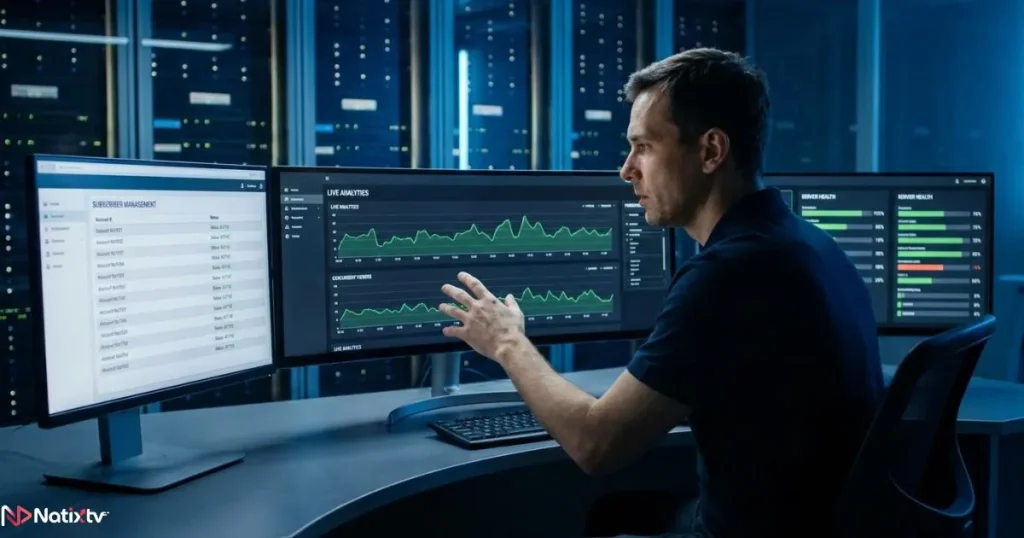
- Skipping the trial period entirely. Any serious software provider should offer a demo or pilot period. Always stress-test with real concurrent users before committing.
- Overlooking GDPR and regional compliance. Data privacy regulations affect how you store subscriber information, and non-compliance carries real financial risk.
- Selecting software with no recent update history. A platform that hasn’t been updated in 12 months is a security risk waiting to materialize.
- Neglecting CDN integration. Without it, subscribers in distant regions will consistently experience worse quality than those close to your server — and they’ll blame you, not the geography.
Standards What the Best IPTV Platforms Have in Common in 2026
Across different software types and price tiers, the leading solutions in 2026 share a recognizable set of qualities. If a platform you’re evaluating lacks several of these, treat it as a serious warning sign.
- Rock-solid uptime backed by redundant server architecture and multi-zone hosting.
- An IPTV panel that is genuinely intuitive for both admin users and resellers — not just technically functional.
- Clean integration pathways with third-party tools: billing systems, CRMs, analytics dashboards, and content delivery APIs.
- An active product roadmap with documented updates, responding to real market shifts like 8K readiness and AI-powered content recommendations.
- Transparent, predictable pricing with no hidden overage fees or surprise policy changes.
If you’ve ever used a service where everything just worked — where you forgot you were even using software — that’s what a great streaming platform actually feels like from the subscriber’s perspective. The goal is invisibility through reliability. And if you’re still exploring what a top rated IPTV experience looks like as an end user, the next section is a useful reference point.
Setup Configuring Your IPTV Service Across Devices
Choosing the right IPTV server software is only part of the equation. The other half is ensuring that your subscribers — or you, as a viewer — can actually connect to the service smoothly across every device they own. Most modern IPTV platforms use the Xtream Codes API as a universal connection standard, which means a single set of credentials can unlock access on Smart TVs, Firestick, Android boxes, iOS, and web players simultaneously. If you’re new to this process, our step-by-step walkthrough for setting up IPTV on any device using the Xtream application covers every major platform in detail.
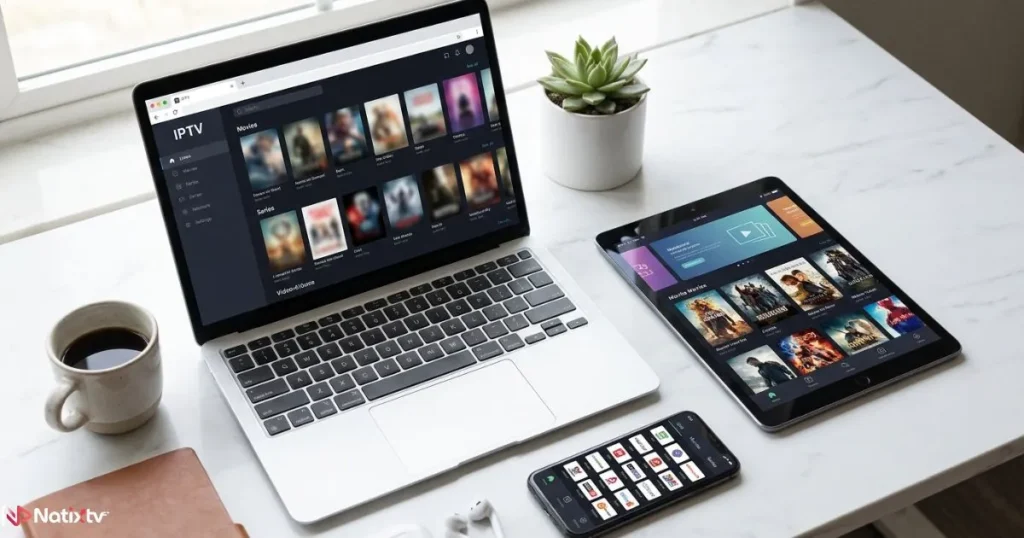
Compatibility across devices is not a bonus feature — it’s an expectation. Any platform you evaluate should be assessed specifically on how gracefully it handles multi-device households, because that is the standard your subscribers will hold you to.
Free Trial Available
NatixTV: What a Well-Built IPTV Platform Looks Like in Practice
If you’re evaluating what a premium IPTV experience actually delivers from the subscriber side, NatixTV is a practical reference point. It’s a service built on solid streaming infrastructure, compatible with Smart TVs, Android boxes, Firestick, MAG devices, iOS and Android smartphones, and PC or Mac browsers. No patchwork compatibility. No device-specific asterisks in the small print.
What makes it especially useful as an evaluation tool is the free trial period of 24 to 48 hours available to new users. That’s long enough to test stream stability across different channels, check how the EPG loads, and confirm device compatibility under real conditions — before spending a cent. No commitment, no credit card required to understand the quality you’re signing up for. Not sure yet? That free window exists precisely so you can make an informed decision.
FAQ Frequently Asked Questions
What is IPTV server software and what does it actually do?
This technology stack receives video content from broadcast sources or content libraries, processes it (encoding or transcoding as needed), and delivers it over IP networks to subscriber devices. It typically includes a streaming server component, a middleware layer for authentication and user management, and an admin panel for operational control. Without it, there’s no organized delivery — just raw video files with no subscriber management, device compatibility, or EPG structure.
How do I choose the best streaming server solution for a small IPTV operation?
For small operators just getting started, commercial or SaaS-based solutions offer the most practical entry point. They require less technical setup, include vendor support, and allow you to focus on growing your subscriber base rather than managing infrastructure. Prioritize platforms with strong device compatibility, a clean IPTV management panel, and a free trial or demo period so you can validate performance before committing to a contract.
What is the difference between IPTV middleware and an IPTV panel?
These two terms are often confused but refer to different layers. IPTV middleware is the backend system that manages authentication, EPG data, subscription logic, and the interface between your streaming server and your subscribers’ devices. The IPTV panel, on the other hand, is the administrative interface that operators use to manage users, create packages, assign permissions, and view reports. Think of middleware as the engine and the panel as the dashboard.
Does your IPTV platform support 4K streaming and simultaneous multi-device connections?
Yes — but not all platforms handle it equally well. True 4K delivery requires significant transcoding capacity and bandwidth. The best platforms support adaptive bitrate streaming, which dynamically adjusts output quality based on each viewer’s connection speed. If you’re delivering 4K content to large audiences simultaneously, ensure your IPTV hosting infrastructure includes sufficient CPU resources and CDN distribution to handle peak concurrent loads without degradation.
What security features matter most in an IPTV streaming platform?
At minimum, look for stream token authentication (which prevents URL sharing and stream theft), SSL/TLS encryption for data in transit, DRM support for premium content protection, and concurrent connection limits per account. Anti-piracy tools that detect and block unauthorized redistribution are increasingly important as content theft has become more sophisticated. Security should be treated as a core feature requirement, not an add-on to consider later.
Is open-source software a viable option for professional IPTV hosting?
It can be — with the right team. Open-source solutions like Flussonic or Nimble Streamer offer maximum flexibility and no licensing costs, which makes them attractive for technically capable operators. However, they require experienced engineers to deploy, secure, and maintain. For teams without that in-house capacity, the hidden costs in development time and security exposure often outweigh the savings on licensing fees. Always assess your actual technical resources before choosing the open-source route.
Final Thoughts: IPTV Server Software Is a Long-Term Commitment
The right IPTV server software is not the most expensive one, the most popular one, or even the easiest one to set up. It’s the one that fits your scale, your technical capacity, your content library, and the experience you want to deliver to every subscriber, on every device, every single time they press play.
Use the seven evaluation criteria in this guide as your working checklist. Understand the difference between your streaming server, your IPTV middleware, and your management panel — because each one plays a distinct role in the outcome. Pick the type of solution that matches your actual operational reality, not an aspirational version of it. And never commit to a platform without testing it under real conditions first.
The good news is that testing doesn’t have to cost you anything. Whether you’re evaluating software as an operator or exploring IPTV as a viewer, services like NatixTV make the stakes-free trial a standard part of the process. A top rated IPTV experience starts with the right infrastructure decisions — and great software doesn’t just stream content. It builds trust, one buffer-free minute at a time.Try NatixTV Free for 24-48 Hours