You know exactly how it feels. The stadium is roaring, the final seconds are ticking down, and your screen freezes into a pixelated mess. Or maybe you settled in for a quiet evening of 4K cinema and spent half of it watching a loading wheel spin. These are not random technical glitches. They are the direct consequence of choosing the wrong provider. An iptv stable service is not a luxury — it is the baseline requirement for anyone serious about online streaming. If you are looking for a no-compromise experience, this guide is for you. iptv usa users especially know how frustrating poor streaming quality can be during peak hours, and this article will show you exactly what to look for.
The IPTV market is crowded with options. Dozens of providers promise thousands of channels, crystal-clear resolution, and zero interruptions. The reality is often very different. Many services collapse under real-world conditions: busy evenings, simultaneous connections, or live sports events that spike server demand in seconds. Understanding what separates a genuinely reliable service from a flashy but fragile one will save you money, time, and a lot of frustration.
By the end of this guide, you will know exactly which criteria to evaluate, which red flags to avoid, and how to verify IPTV performance before spending a single dollar. Let us get into it.
Table of Contents
What “Stable IPTV” Actually Means
The Real Definition of Streaming Stability
When people search for an iptv stable service, they usually mean one thing: a stream that plays when you press play and keeps playing without interruption. But the technical reality behind that simple expectation is more layered. Streaming stability is the result of several interconnected factors: server uptime, bandwidth capacity, content delivery infrastructure, and the efficiency of the underlying streaming protocol.
A truly stable IPTV service maintains consistent video quality regardless of the time of day, the number of concurrent users, or the type of content being streamed. It should handle HD live channels, VOD libraries, and 4K content with equal reliability. The benchmark most quality providers aim for is 99.5% uptime or higher, meaning less than 44 hours of potential downtime per year.
Why So Many IPTV Services Fail Under Pressure
The core issue with unstable providers is almost always infrastructure. Many low-cost services oversell subscriptions without investing in the server capacity to support them. During off-peak hours, everything works fine. But as soon as a major sporting event kicks off or primetime television begins, those same servers buckle under the load.
Other common culprits include:
- Single-server setups with no redundancy or failover
- Insufficient CDN (Content Delivery Network) coverage across geographic regions
- No protection against DDoS attacks, which can take an entire network offline
- Oversaturated bandwidth that creates bottlenecks for every connected user
When you understand these root causes, you realize that IPTV streaming quality is not about chance. It is a direct reflection of how much a provider has invested in their backend infrastructure.
Key Criteria to Evaluate Before You Subscribe
Server Infrastructure and Redundancy
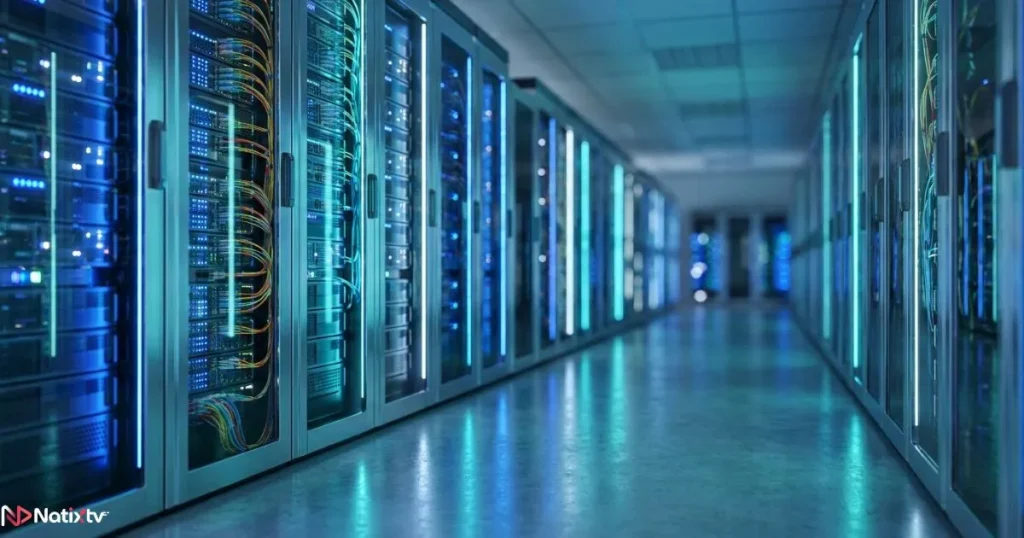
The foundation of any iptv stable experience is the server network behind it. A credible provider operates multiple server clusters distributed across different geographic locations. This redundancy means that if one server experiences issues, your stream is automatically rerouted to another with no noticeable interruption on your end.
Look for these specific features when evaluating IPTV servers:
- Anti-DDoS protection to maintain service during cyberattacks
- Load balancing across multiple nodes to prevent overload
- A published server status page or uptime monitor you can check independently
- At least three server clusters for serious reliability
Studies and industry reports consistently show that providers running three or more distributed server clusters reduce user-facing downtime by up to 70% compared to single-server setups. That number alone should influence your decision.
Uptime Guarantees and What They Mean
Any reputable IPTV service should be transparent about its uptime record. Some providers include a Service Level Agreement (SLA) that formally commits to a minimum uptime percentage. For a premium IPTV provider, 99.5% to 99.9% uptime is the realistic standard to expect.
You can verify these claims independently by checking community forums, review platforms such as Trustpilot, and subreddits dedicated to IPTV discussions. User reviews from the past three months give you the most accurate picture of current service reliability. Older reviews may reflect a provider that has since upgraded, or degraded, their infrastructure.
Stream Quality Options: HD, Full HD, and IPTV 4K
A quality provider should offer content at multiple resolution tiers to accommodate different devices and internet speeds. IPTV 4K streaming in particular places significant demands on both the provider’s servers and your home connection. For true 4K, look for providers that support the H.265/HEVC codec, which delivers superior image quality at lower bitrates compared to older standards.
Adaptive bitrate streaming is another feature worth seeking out. This technology automatically adjusts stream quality in real time based on your available bandwidth, ensuring that a slight speed fluctuation does not turn into a five-minute buffering session.
Simultaneous Connections and Household Use
If you plan to stream on multiple devices at the same time, the number of simultaneous connections your plan allows becomes critical. Most providers offer plans ranging from one to four concurrent streams. Always check this before subscribing, especially for family households where one person might be watching a live sports match while another is streaming a series on a different device.
How to Test an IPTV Service Before Committing
The Non-Negotiable Value of a Free Trial
Reading reviews and checking spec sheets will only take you so far. The most reliable way to evaluate an iptv stable service is to test it yourself, under your real conditions, on your actual device, using your own internet connection. This is exactly why a free trial period is not just a nice bonus. It is an essential trust signal from any provider that genuinely stands behind their service.
During your trial, make sure you test at the right moments:
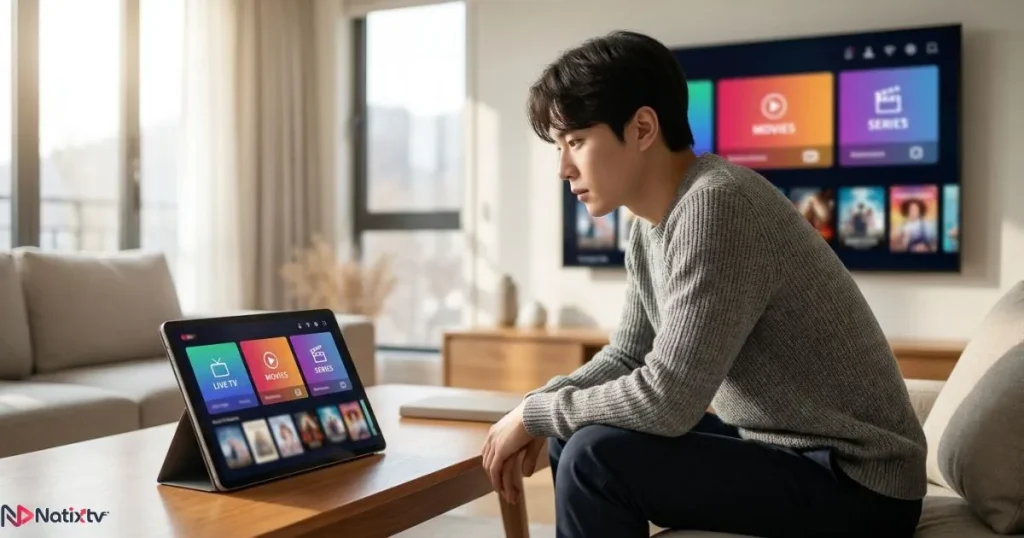
- During peak evening hours (7 PM to 11 PM) when server load is highest
- During a live sports event or popular broadcast, if possible
- Switching rapidly between channels to test loading speed
- Playing a 4K VOD title for at least 20 continuous minutes
- Using multiple devices simultaneously if your plan allows it
Natixtv Free Trial: Natixtv offers a free trial period of 24 to 48 hours, giving you a real window to assess IPTV performance across all your devices before making any financial commitment. It is one of the clearest demonstrations of confidence a provider can offer.
If you are also interested in evaluating providers specifically for live sports coverage, this guide to finding reliable sports streaming without missing a match covers the specific criteria you need to check before game day.
Questions to Ask Before You Subscribe
Beyond the trial, a short due diligence checklist will help you filter out weak providers quickly:
- Does the provider publish server status updates or an uptime dashboard?
- Is customer support available 24/7, and through which channels?
- What is the refund or cancellation policy if the service does not meet expectations?
- Is the service compatible with the specific device you plan to use?
- Are the IPTV servers located close to your region for lower latency?
A provider that cannot answer these questions transparently is a provider worth skipping.
Device Compatibility and Your Internet Setup
Which Devices Work With a Stable IPTV Service
One of the practical advantages of modern iptv stable services is broad device compatibility. You should not need to buy new hardware to enjoy a quality IPTV experience. Most premium providers support:
- Smart TVs from Samsung and LG
- Amazon Fire TV Stick, Roku, and Chromecast
- Android and iOS smartphones and tablets
- MAG boxes, Enigma2 receivers, and Formuler devices
- Windows and macOS computers via VLC or a dedicated IPTV app
iptv usa subscribers using Natixtv benefit from compatibility across all of the above categories, which means you can start watching on your TV tonight and switch to your phone tomorrow without any technical friction.
Internet Speed Requirements for Every Resolution
Your IPTV service is only as stable as your internet connection allows. Here is a practical reference table to match your current plan to the right streaming tier:
| Stream Quality | Minimum Speed Required | Recommended Setup |
|---|---|---|
| SD (Standard Definition) | 5 Mbps | Wi-Fi acceptable |
| HD (720p) | 10 Mbps | Wi-Fi acceptable |
| Full HD (1080p) | 20 Mbps | Wired preferred |
| 4K Ultra HD | 40-50 Mbps | Wired strongly recommended |
If you are targeting IPTV 4K quality, a wired Ethernet connection is not just recommended, it is practically essential. Wi-Fi signals are subject to interference, distance degradation, and congestion from other household devices, all of which can introduce exactly the kind of micro-interruptions that ruin an immersive viewing experience. According to Ookla’s network performance data, wired connections consistently outperform Wi-Fi in both speed and stability, even on the same router.
Choosing the Right Player App
Even with perfect IPTV servers and a fast internet connection, a poorly optimized player app can make your experience feel unstable. Popular and well-maintained apps include IPTV Smarters Pro, TiviMate, and GSE Smart IPTV. Each has different strengths in terms of EPG (Electronic Program Guide) support, interface speed, and multi-connection handling.
During your free trial period, test both the server and the player combination you plan to use. A sluggish app introduces buffering and freezing that can look exactly like a server-side problem when it is actually a software issue.
Red Flags: How to Spot an Unreliable Provider
Claims That Should Make You Skeptical
The IPTV market includes plenty of providers making promises they cannot keep. Learning to read the warning signs will save you from paying for a substandard service. Be wary of any provider that:
- Advertises 10,000+ channels with no mention of server infrastructure or uptime data
- Offers no trial period and no refund policy
- Has no identifiable contact information or customer support channel
- Prices their plans suspiciously low compared to market standards
- Cannot explain what makes their IPTV service reliable
A legitimate, iptv stable provider is proud of their infrastructure and transparent about how it works. Vagueness is almost always a warning sign.
How to Read Community Signals
Independent user communities are one of your most powerful research tools. Reddit threads, specialized IPTV forums, and verified review platforms give you unfiltered feedback from real subscribers. Focus specifically on reviews from the last three months: server quality can change rapidly, and an outdated five-star review may no longer reflect the current reality of a service that has since been oversold.
When you find a provider consistently praised for reliable IPTV even during peak hours and major live events, that is a strong indicator of genuine infrastructure investment. For a broader comparison of providers that have earned consistent positive feedback, this breakdown of IPTV providers that consistently deliver on their promises is worth reading before you decide.
Free vs. Premium IPTV: Understanding the Real Cost
| Feature | Free IPTV | Premium IPTV |
|---|---|---|
| Stability / Uptime | 50-70% (unreliable) | 99%+ (consistent) |
| Stream Quality | SD to HD only | HD, Full HD, 4K available |
| Server Redundancy | None or minimal | Multiple distributed clusters |
| Customer Support | None | 24/7 dedicated support |
| Free Trial Available | Rarely | Commonly offered (24-48h) |
| EPG and Catch-Up TV | Often missing | Included in most plans |
The math on this is straightforward. If a free service buffers for 30% of your viewing time, you are not actually getting a free service. You are paying with frustration, missed moments, and the time spent troubleshooting. A paid, iptv stable subscription with a proven uptime record costs more upfront but delivers a fundamentally different experience. When you factor in VOD libraries, EPG guides, and catch-up TV features, the value of a premium IPTV plan becomes even clearer.
Your Complete Checklist Before Subscribing to Any IPTV Service
Use this checklist every time you evaluate a new provider. It will filter out weak options quickly and point you toward services genuinely worth your time:
- Define your needs: channels, language preferences, sports coverage, 4K content, VOD access
- Confirm device compatibility with your TV, streaming stick, or mobile device
- Check that your internet speed meets the minimum for your desired resolution
- Look for a free trial of at least 24 hours before any financial commitment
- Test the service during peak evening hours, not just a quiet Tuesday afternoon
- Read recent user reviews from the past three months on independent platforms
- Confirm that 24/7 customer support is available and responsive
- Verify there is a clear refund or cancellation policy
- Evaluate the EPG quality and channel list depth
- Check how many simultaneous connections your plan includes
Natixtv satisfies every point on this list. The service is compatible with all major devices, offers a free 24 to 48-hour trial, provides a broad channel catalog with international options, and backs it all with responsive customer support. If you want a starting point that removes the guesswork from finding an iptv stable provider, it is a benchmark worth using as your reference.

Frequently Asked Questions
What exactly is an iptv stable service and why does it matter more than channel count?
An iptv stable service is one that delivers a consistent, uninterrupted stream at your selected resolution under real-world conditions: evening traffic, live events, and multiple simultaneous users. Channel count is irrelevant if those channels freeze or drop. Stability is the single most important quality criterion because it determines whether your viewing experience is actually enjoyable.
How much internet speed do I need for IPTV 4K without buffering?
For genuine 4K streaming, you need a minimum of 40 Mbps, and ideally 50 Mbps or higher on a wired Ethernet connection. Wi-Fi can work, but the risk of interference and speed fluctuations increases dramatically, especially in multi-device households. If your connection meets the threshold, a provider with strong IPTV servers should deliver a smooth experience.
Can I test IPTV performance before paying for a subscription?
Yes, and you absolutely should. Any credible provider will offer a free trial period. Natixtv provides a 24 to 48-hour trial that gives you enough time to test live channels, VOD content, and 4K streams on your actual device and connection. Use peak hours for testing. That is when the real character of a service becomes visible.
What causes buffering even when my internet speed is high?
High personal speeds do not guarantee a smooth experience if the provider’s IPTV servers are overloaded. Server-side congestion, poor CDN routing, or a lack of load balancing can create bottlenecks that have nothing to do with your home connection. This is why server infrastructure matters as much as your own bandwidth when evaluating IPTV streaming quality.
Is a reliable IPTV service worth paying for when free options exist?
Free IPTV services typically deliver 50-70% uptime at best and frequently drop during exactly the moments you care most about: live sports, season finales, and prime-time broadcasts. A premium IPTV provider with 99%+ uptime, proper IPTV servers, and 24/7 support eliminates all of that friction. The price difference between free and premium is almost always worth it when you calculate the real cost of a poor viewing experience.
How do I know if a provider actually has reliable IPTV servers?
Look for providers that mention server redundancy, anti-DDoS protection, and distributed CDN infrastructure in their documentation. Then verify those claims by checking independent user reviews from the past three months on platforms like Reddit or Trustpilot. A provider confident in their server quality will also offer a meaningful free trial, because they know the experience will speak for itself.
Conclusion: Choose Stability, Not Frustration
Finding a genuinely iptv stable service comes down to knowing what to look for and refusing to settle for less. Server infrastructure, uptime records, device compatibility, stream resolution options, and a meaningful free trial are the benchmarks that separate credible providers from the rest. No amount of clever marketing replaces the evidence of a service that works reliably under real conditions.
Before you commit to any subscription, test it. Use a free trial, push the service during peak hours, and pay attention to how it handles the moments that matter most. A provider that stands behind their IPTV performance will always offer you that opportunity. If you are ready to experience what buffer-free streaming actually feels like, iptv usa viewers can start with Natixtv’s free 24 to 48-hour trial, no risk, no commitment, and judge the service entirely on its own merit. That is exactly the kind of confidence a truly iptv stable provider should offer.